Monday, February 01, 2010

Ram jam - Ramirez's Little Eartheating Butterfly Cichlid (with the irregular lateral line)

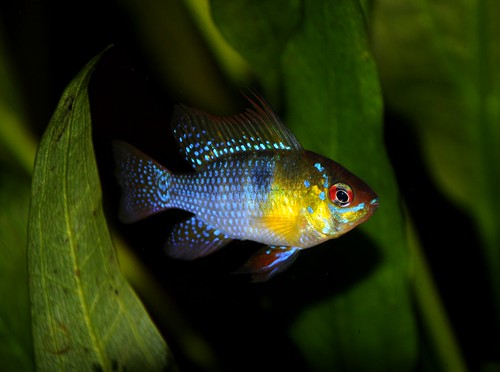
A rare captive shot here, for the simple reason that the only way I can show you how spectacular the dwarf cichlids of south america are is through aquarium specimens and this is perhaps the most spectacular of them all:

ramirezii

Known to most aquarists simply as a "ram" this little guy (the picture you are looking at is almost twice life size). Originally it was scientifically named Apistogramma ramirezi, ramirezi signifying the collector Manuel Ramirez and Apistogramma meaning "irregular lateral line", it has also been known as Papiliochromis ramirezi (Ramirez's butterfly cichlid), Papilochromis ramirezi (Ramirez's butterfly cichlid wrongly spelt) and Microgeophagus ramirezi (Ramirez's little eartheater wrongly spelt again) but is correctly known, for now at least, as Mikrogeophagus ramirezi (Ramirez's little eartheater).

We'll stick with ram shall we? Like most in this group rams are characterful little devils. They mate, form pairs, defend territories, build nests, brood the eggs and defend their young......and all at about 2 inches long while looking like Faberge fish not living animals. Given correct conditions Rams (and other dwarf cichlids) are easy to look after and great fun to watch although the hustle and bustle of many community tanks can be a bit much for them and they much prefer a biotypic planted tank with tetras and small catfish from the region as chums. If you keep tropical fish and you haven't tried a south american dwarf cichlid give one a go. If you don't visit your local pet store and wonder.

Friday, January 29, 2010

bug

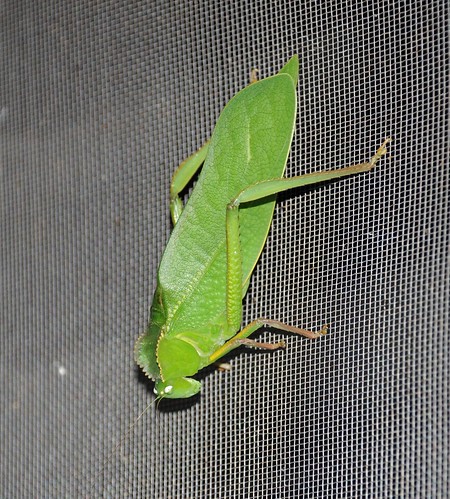
If a cold winter means one thing naturewise it is no insects. As a result of my move insects have been in short supply over the winter so here's a nice therapeutic katyid.

katyid

This thing was an absolute monster. About 5 inches long.

Thursday, January 28, 2010

The great American prairie (sort of)

This is what I want my next garden to look like (only with, you know, a house in the background not one of the world's most iconic skyscapes).

luriegarden2

This is the Lurie Garden in Chicago's millenium park designed by Gustafson Guthrie Nichol Ltd, Robert Israel and the legendary Piet Oudolf and it showcases the Prairie style Oudolf and his cohorts have made famous. I caught it in autumn so the bulk of the colour was gone but it still looked magnificent. Oudolf has said in the past that plants should look good when dead and these certainly did.

luriegarden

It was also remarkably full of life considering its location - rabbits were in and around the garden as were squirrels (how the rabbits got through all the concrete to get to Millenium park I have no idea) and various finches and sparrows were attacking seed heads with vigour. I'm envisioning myself walking to the house past Salvia and Monardia buzzing with bees and butterflies sitting on Echinacea cushions. Hopefully a little project for summer.

Wednesday, January 27, 2010

Wordless wednesday

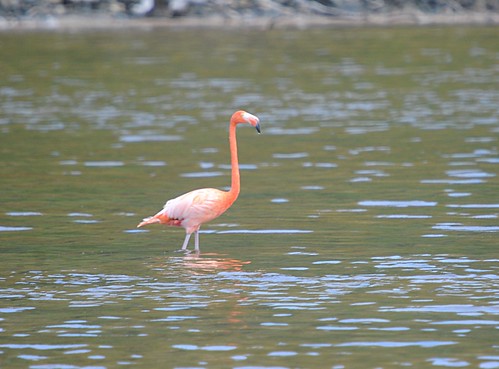
flamingo

On my very last day in the Caribbean, I simply had to go find my flamingos. I did and I got one of my favourite flamingo shots.

Tuesday, January 26, 2010

the Ghost and the Darkness

Roughly 112 years ago, talking about a major railway project in the Houses of Parliament, British Prime Minister Lord Salisbury made surely one of the most extraordinary statement ever uttered by a politician not referring to his own fidelity:

"The whole of the works were put to a stop because a pair of man-eating lions appeared in the locality and conceived a most unfortunate taste for our workmen. At last the labourers entirely declined to carry on unless they were guarded by iron entrenchments.

Of course it is difficult to work a railway under these conditions and until we found an enthusiastic sportsman to get rid of these lions our enterprise was seriously hindered."

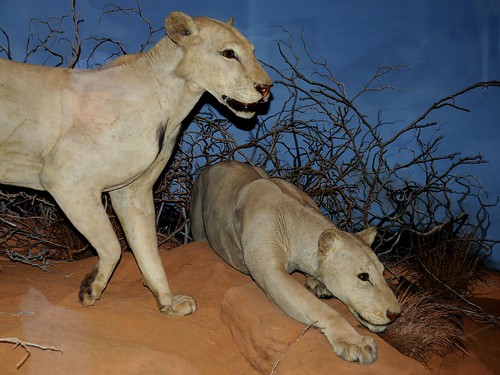
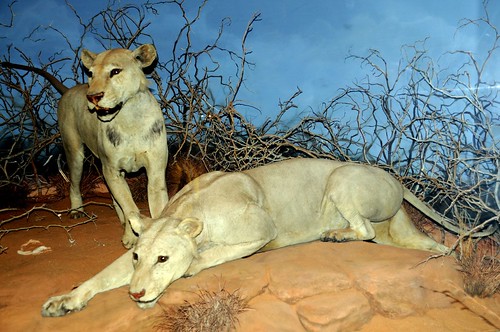
These are the lions in question; the Ghost and the Darkness, the Maneaters of Tsavo.

the ghost and the darkness

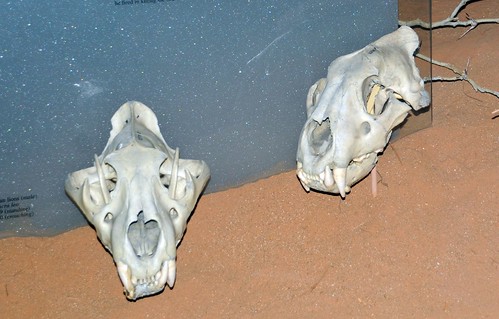
The "enthusiastic sportsman" in question was one Lt. Col. John Henry Patterson. Patterson claimed the lions may have taken as many as a 135 (yes; one hundred and thirty five) victims which as individual man-eating animals go would put them in the premier league with only the Leopard of Rudraprayag and Gustave for company. The reality is likely to be that the lions killed considerably fewer people than this but there is no question they killed a huge number of people, halted construction on the bridge in question and proved very difficult to stop. The two lions' depredations lasted 9 months with Patterson eventually killing the lions in December 1898.

the ghost and the darkness

Patterson's memoir of his ordeal and quest became a huge bestseller and was the inspiration for the film "The Ghost and the Darkness" starring Val Kilmer as Patterson and Michael Douglas as a fictional hunter called Charles Remmington (Remmington was based on Charles Ryall who hunted but was killed by the last of the two lions after Patterson dispatched the first, the lion entering Ryall's train carriage and killing him!).

the ghost and the darkness

If you're thinking the two look unimpressive for what they are, you're absolutely right. Patterson reported the lions to be absolute monsters (among the largest ever recorded) but the measurements tell a different story. These are maneless male lions (as a number of maneaters from this region have been) and appear averaged sized (and notably smaller than the maneater of Mfuwe). It should be noted however that the skins spent twenty years as rugs before being remounted and accordingly may be smaller than they should be due to trimming and damage. Nevertheless even in their sad current state these two cats provide a stark reminder that we are not always the top of the food chain.

Tuesday, January 19, 2010

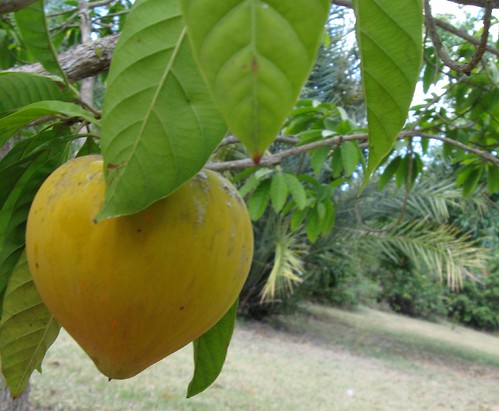
Canistel

canistel

This is a Canistel, a tropical fruit originating from Mexico and the rest of central America. It is sometimes called eggfruit because of its texture which is apparently scrambled-eggy. I've not seen many of these around, this one was in a botanic garden but notwithstanding how heavily a small plant was fruiting, they don't seem popular. If I were ever to own a Caribbean garden (in addition to a vast array of cycads), I think I'd definitely give one a go alongside the more traditional avocados, bananas and mangoes. There are a few more tropical fruit in the archives to come but the canistel actually fits into another of my categories of interest. Inside that fruit are some chunky seeds and the shape of fruit and seed illustrate the environment the Canistel developed in. Its another of those plants which hints at the dead American megafauna. I have a more detailed post on this issue to come soon too. Once work settles down you can expect some more structured, interesting content than the current daily hit-and-runs I promise!

Monday, January 18, 2010

Plans for 2010

Having been trapped inside by the weather getting cabin-fever I've been thinking about the future a fair bit, specifically my nature-based plans for 2010. So I thought I'd share a little list of what I'm excited about:
  1. Herping. I'm in one of the world's worst places for herping. We have like 5 species or something (allegedly, I'm not convinced about 1 being extant). Which means it should be no trouble to find those species and properly document the local herpetofauna.....also I'm planning a couple of cheeky trips which whilst not herp-based or focused may well yield some really cool species.
  2. Small mammals. We do however have some very cool small mammals. Not sure quite how I'm going to photograph these though I have some ideas. Looking forward to seeing some cool furballs though.
  3. Terrestrial orchids. I'm in a good spot for the delicately beautiful european orchids so when the weather improves, photos should be good.
  4. Birds.....more specifically raptors. I have some projects in mind with 3 species in particular.
  5. Rockpooling. Its the new diving. Well its not but I am planning to unleash the 8 year old inside and do some serious rockpooling. If I say so myself I'm predicting very cool, very weird critters.
  6. Food. Access to a bountiful sea and fingers crossed a garden means I'm planning to dine on nature's bounty and I'll share the results (unless the mushrooming goes horribly wrong in which case the blog will most likely be silent).
Lets see how I've done on those 6 when December comes round.

Sunday, January 17, 2010

Last week's birds.

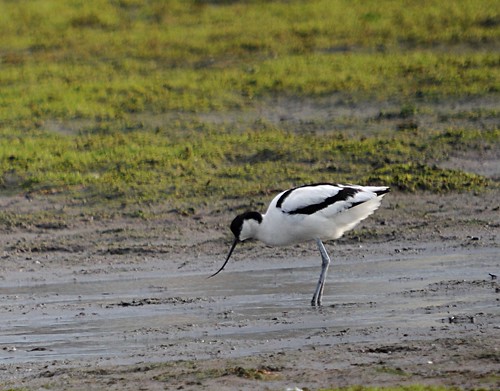
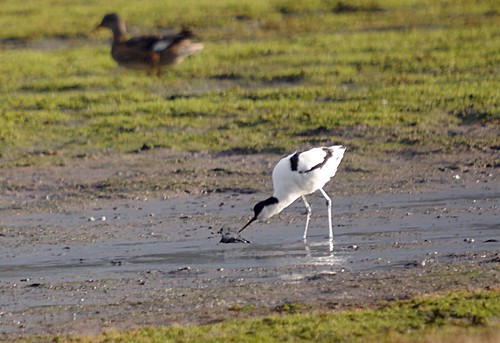
Last week's because notwithstanding the fact that the cold weather has dumped an array of supercool birds onto the island, I spent the weekend in the office. Obviously that couldn't have happened on the days it was too cold to enjoy properly. Luckily from a bird-blogging perspective, if not from a tai-haku-happiness this weekend perspective, I still have some photos from last week (when it was eyewateringly cold). The eye-watering cold is of course what has led to the array of supercool birds being here, but they were mostly hidden away or hunkered down or still on their way last weekend with some notable exceptions, one of which was this pied avocet:

avocet6

I don't think I'll get bored with these, no matter how well their recovery goes, nor how common they may become. They are actually rather unusual in our part of the world notwithstanding their successes elsewhere in the British Isles.

avocet5

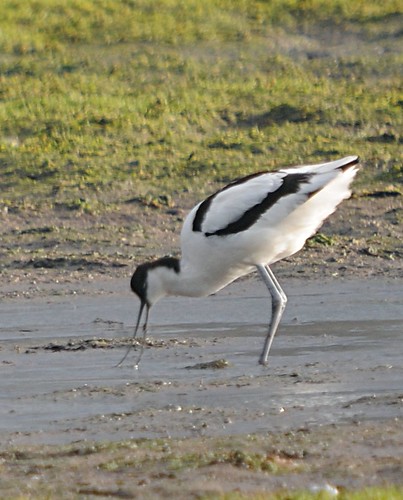
Which made this loner a particularly welcome sight. I'd heard there was one around and been unable to locate it. I was driving home disappointed when I spotted it in a field by the road, pulled up and grabbed these shots. It was feeding heavily on whatever is in that mud. Also Note the open bill above. How cool is the upturned bill when open?

avocet2

They are quite aggressive little feeders. Check out the torque being applied to whatever that is above.

Friday, January 15, 2010

Mangrove Saltmarsh

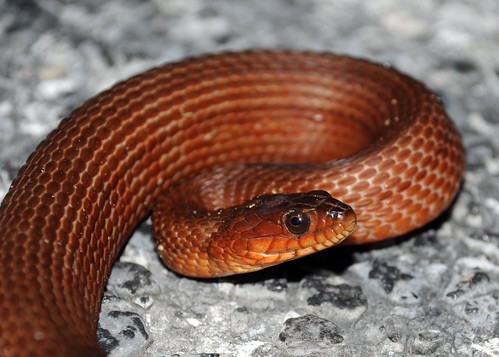
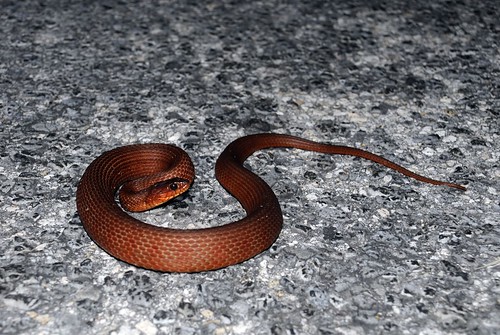
SO we continue our little photo tour of the snakes of southern Florida. Can you believe how many different species I saw in only a few evenings work (and I'm not finished yet)? This one really is a southern Floridian speciality - it doesn't extend very far north at all. Wikipedia refers to its range as from Tampa Bay, Florida south to Miami and northward along the Atlantic coast to the vicinity of Cape Canaveral. This is the Mangrove Salt Marsh Snake (Nerodia clarkii compressicauda). As a member of the genus Nerodia (which contains north america's common water snake species) this subspecies has the typical Nerodia face - big eyes and a hint of a grin where the mouth turns up. Its also a very variable species in terms of colour though both of the ones I came across shared this spectacular orange-brown.

mangrove saltmarsh snake

These are quite chunky little snakes - pretty fat throughout and then suddenly tapering off. I think this one puffed itself up a little for my benefit too though.

mangrove saltmarsh snake2

As the names suggest this is a snake of brackish areas and I've only ever seen them in one particular spot. They're comfortable in the water and eat a lot of fish but will climb a little too. You can just make out a faint banding on this one's flank. Like many of america's lesser known non-venomous snakes, this is a fascinating little guy. There is another subspecies in Florida - the Atlantic Saltmarsh which is much rarer and very very restricted in range; other water snakes are far more common and we'll get to those.

Thursday, January 14, 2010

Thoughts on Haiti.....

...as I imagine many people have this week, I've been thinking about Haiti. I perhaps have a little closer feel for the situation than many watching the television news as I've seen Haiti for myself though I never went there. In 2008 we visited the Dominican Republic and after visiting Lago Enriquillo our guide told us we were going to "a Haitian market". Expecting a fairly standard tourist market, we ended up at a flooded "market" that was in neither Haiti nor DR but in the no-mans land between the two. We had half-expected wood carvings or beads or other common touristy merchandising but this was an actual market used by locals. Locals who crossed from DR to buy toothpaste and rice from large men with hardware on their belts. Toothpaste and rice in containers stamped "WHO". These people were collecting the food and health aid and selling it cheap across the border. Children were playing with machetes and bowie knives in the polluted water that flooded the market edge.

Looking to the distanceone could see the difference between the two countries. One's land lush and healthy, the other brown and dead though the two sights were separated by less than a mile. A few weeks after we stared across the border with dread, I came across news reports of Haitians eating mud cakes to try and fill empty stomachs.

A dead, deforested land with armed gangs stealing charity and medicine from hungry children who are reduced to eating mud. Its a scandal that it took a massive earthquake and thousands more dead to really focus the world's attention on what is happening to Haiti but now that it has I hope we can fix more than the buildings.

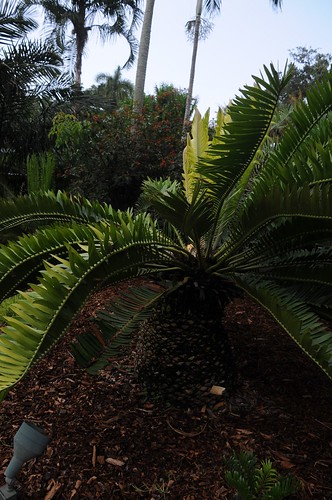
Marvellous manikensis

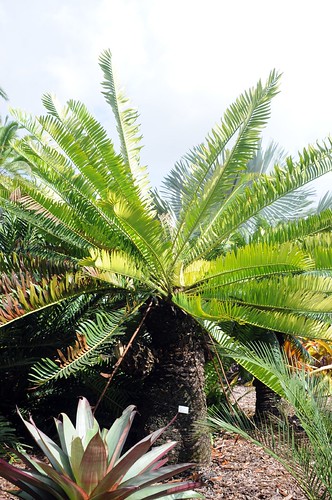
Encephalartos manikensis is one of the giant Encephalartos species from southern africa - in this case, Zimbabwe (where it is presumably getting rarer and rarer as conditions worsen and more and more specimens get poached or eaten) and Mozambique. It is the head of the what is known as the "E. manikensis complex", a group of cycad forms in this region, which includes E. manikensis itself, closely related species like E. pterogonus and chimanimaniensis as well as a number of forms currently attributed to E. manikensis but which may represent separate taxa such as E. manikensis "bandula" sometimes known as E. bandula.

encephalartos manikensis

Plants in this complex tend to have fat trunks up to 5 feet and entire leaflets. The specimen below for example has a bulky, almost triangular, trunk.

encephalartos manikensis5

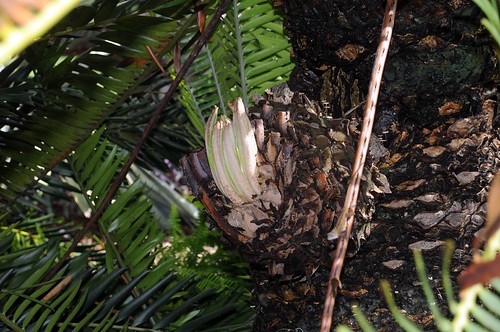
Plants with such heavy trunks are more than capable of becoming multiheaded where damage occurs to the main stem. On the manikensis below you can see a second head pushing a flush of leaves out of a fairly sizeable secondary caudex about 5 feet up the main stem. To the right you can see some scarring which may have been what triggered the development of the pup. This is a plant living in hurricane country which may go some way to explaining this.

encephalartos manikensis3

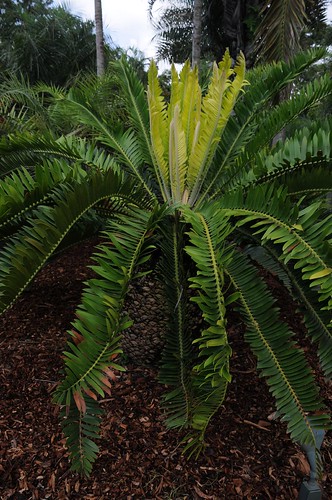
The manikensis complex tend to be rather dour, if regal, cycads. Sure they tend towards a stately bulk and stature but they also tend toward rather bland green leaves and cones and relatively uninteresting leaflet structure. That said this one is putting on quite the display.

encephalartos manikensis4

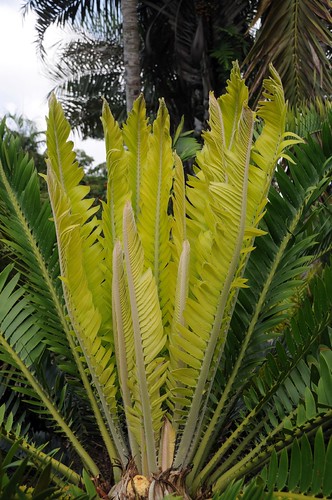
A rather spectacular golden flush.......these new leaves will green as they harden although rarely cycads do push flushes of brighter yellower leaves of no apparent reason.

encephalartos manikensis6

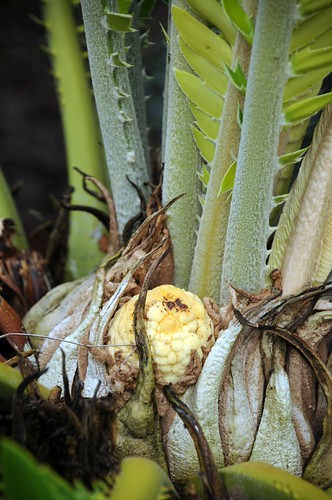
and as if that weren't enough the first signs of an imature cone pushing out. I assume from the scale this will be female but could be wrong.

encephalartos manikensis7

As I said previously this group tends toward green cones, and whilst this one is a nice lemon yellow now I'm guessing it will mature to a greener shade with exposure to the light in the same way as the leaves will. Manikensis incidentally refers to Manica in what is now Zimbabwe, its place of discovery.

Wednesday, January 13, 2010

Wordless wednesday - Sunny day Caribean waders


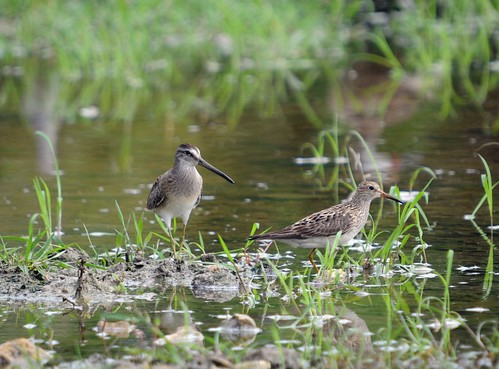
dowitcher and pecsand

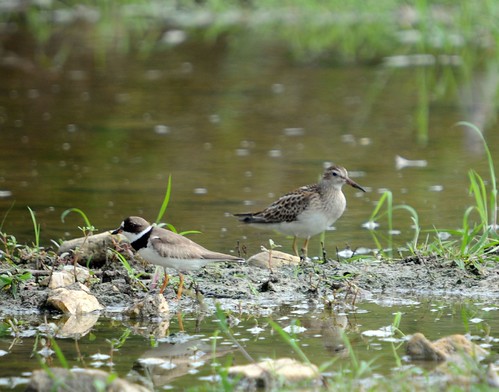
semipalm and pecsand

(t) Dowitcher sp. and pectoral sandpiper
(b) semi-palmated plover and pectoral sandpiper.
Watching waders in the biting cold of the atlantic breezes at the weekend reminded me of sunny days in the caribbean watching waders feeding in storm puddles.

Tuesday, January 12, 2010

Point Break? Point Brent!

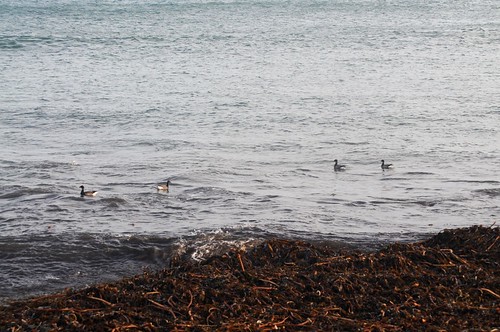
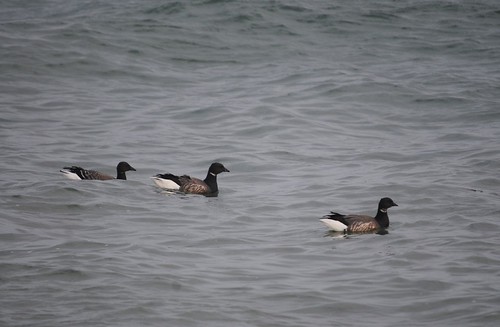
The last time Brent Geese appeared on E, W & W I was in contemplative mood, amazed by the mass of geese arriving in East Anglia for the winter and imagining the bounty they represented for fenlanders of millenia past. I'm still amazed and I still ponder the culinary possibilities certain geese species may represent in terms of sustainable food for a growing global populace but for now here's a more light hearted look at the Brent Goose. You see they like to surf. Here's a foursome of BG having just ridden a wave pretty close to shore.

brents2

....here's the line-up.......

brents

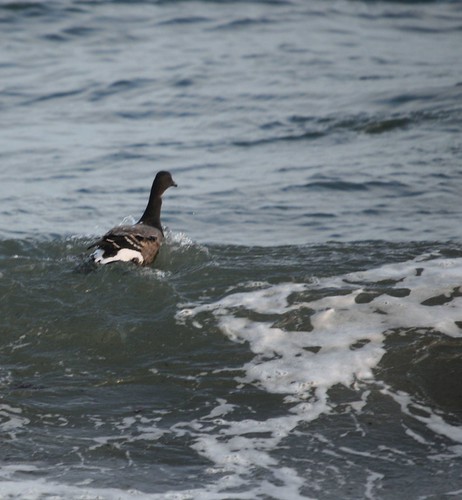
.......and here's number 4 post surf trying to make it back to the line-up...

surfing brent

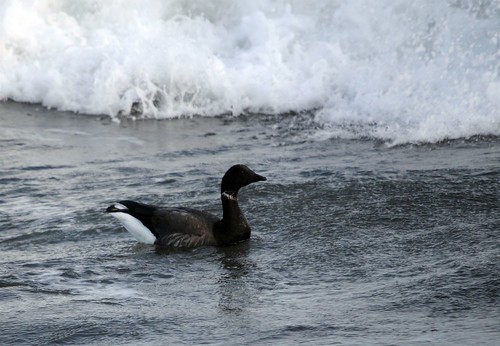
......and this? Well this is the moment just before WIPE OUT!!!

brent2

The photos of dunked brent didn't come out unfortunately. But he hung in there like a good-un.

Monday, January 11, 2010

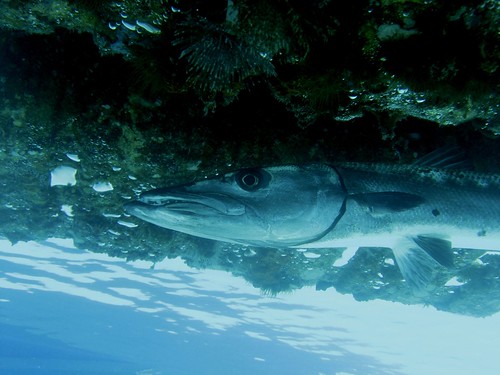
Cuda

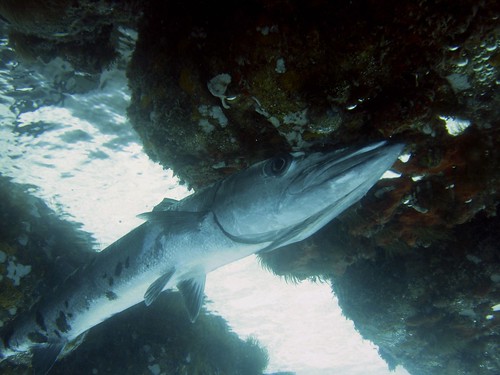
This is the second beast from my bimble in the bay we used for introductory dives. This shot was taken under one of the two little supply jetties and under one or other of them you can usually find one of these.

cuda2

It is worth noting that I usually have a look for these first up because a 5 foot cuda (this one isn't anything like that big but I have seen them) is quite often more than enough marine life for a nervous beginner diver to enjoy. If someone is already nervous about alien concepts like breathing underwater and something almost as long as you with an array of massive and obvious teeth rocks up its understandable they may get a little freaked out. I tried to point these (and the big rays that sometimes hang out there too) out before we got in to give people a while to get used to the idea. 'Cuda are actually harmless unless you are freakishly (struck-by-lightning type freakishly) unlucky or messing about with fish but they sure look impressive.

cuda

They will also allow you to get tremendously close as this one did, making them great for photography and a cool early sighting for students.

Friday, January 08, 2010

E. ferox: The converter

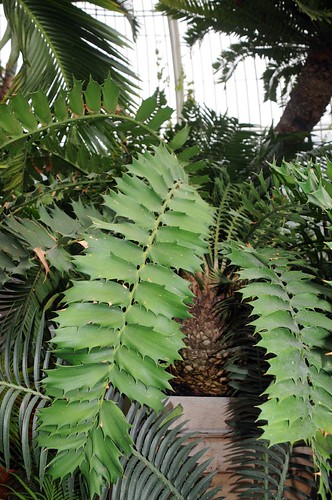
TO the extent that there is a trigger cycad or converter cycad which draws in new addicts in the same way trigger birds do (other than C. revoluta or Z. furfuracea) its probably this. Encephalartos ferox. It doesn't get particularly big, even the oldest specimens rarely top 4 feet in trunk but the leaves make it instantly recognisable. The 6 foot leaves are made up of credit card sized broad leaflets covered in spines and rather holly like. These leaflets are much broader than any other Encephalartos and make this one unique looking but that's just the start.

encephalartos ferox6

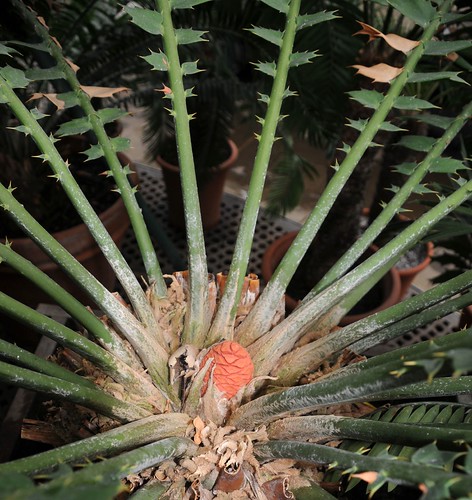
This is a pretty widely distributed species along the coastal plain of Mozambique down to Natal....which is nice because I intend to spend some time that way playing with big sharks so I may eventually see a wild one. It is also widely cultivated because, in addition to the leaves, it pushes cones like these:

encephalartos ferox2

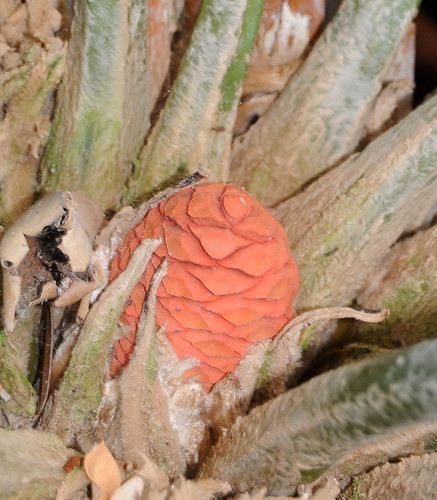
This is only a newly emerging cone and apparently it disappeared shortly after this was taken. I wouldn't be surprised if the staff at Kew took it out to save the plant's energy as I think it may have produced seed fairly recently. Nonetheless if we go to close-up you can see the spectacular peach orange colour they have. If it had matured it would have ended up looking like a day-glo orange pineapple which is a pretty spectacular sexual organ however you look at it and a lot of people see it and want one for their garden.

encephalartos ferox

I mentioned above that these are pretty widely cultivated and if you're thinking of getting an Encephalartos this is probably the one to go for. In the states good sized plants are available at quite reasonable prices from specialist nurseries and the serious collector may choose to collect plants from a number of recognisable localities. The most famous of these in cultivation is E. ferox choegone which has curly leaves which almost roll onto themselves. It is widely grown enough that pollen is often available for pollination and I've even seen self-seeded E. ferox at one Botanic Garden (which must be a serious test of willpower for visitors not going on a plane immediately thereafter). Even those of us in the Encephalartos-starved European Union can grow this beauty, there are a couple on ebay right now at reasonable prices.
Thursday, January 07, 2010

Big anteaters, bad photos and sustainable tourism

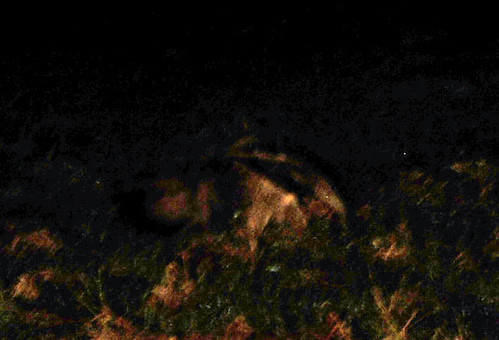
So when I first began the Venezuela posts I mentioned that a number of nature bloggers had recently seen similar stuff in Guyana and that my Venezuela posts would cover similar taxa to Julie's Guyana posts (though inevitably less eloquently). The Venezuela posts continue to be strung out but this post covers an area Julie covered and provides an interesting contrast between our two experience that I thought warranted detailed comparison. Way back in January 2009 Julie posted two posts about her trip to see Giant Anteaters on Guayana's savannah. You can read those here and here and I'd recommend you do so. The gist of Julie's experience was, on my reading of her account, that they drove around the Savannah in the morning looking for anteaters and upon finding one it was pursued by vehicle and ultimately herded on foot towards the viewers. This was apparently a rather stressful looking exercise and concerns were (it would seem rightly) raised about the sustainability and ethicality of such methodology. My giant anteater experience was rather different hence this post. Before we get to methodology lets look to results. Did we see anteaters? Yes. Yes we did. In fact we saw eleven (11!) of them. Which was nice.

The methodology used at Hato el Cedral involves looking for the anteaters at night. This has two benefits. Firstly the anteaters are active at night so they are easy to find, on the move and already active so not being woken. Secondly the other nocturnal stuff is out and about too including owls and nightjar and foxes for us as well as potentially the weird fluffy arboreal anteater and a range of cats (puma was sighted the night we arrived, ocelot is apparently seen reasonably frequently and whilst not yet seen there is no reason to rule out jaguar as a possible). Plus amphibians, snakes and similar stuff of course. The basic technique will not be unfamiliar to most. You drive around in the bed of a pick-up scanning around with a spotlight until you see reflected eyeshine whereupon you head in that direction for a closer look. With fences and ditches of crocs dotted around the farm there is no question of pursuing anything off road so you get close enough for good views and then the beast leisurely trots off back into the dark. We did try approaching one (presumed - it would've been the twelfth) anteater on foot for better photos and whatever it was disappeared completely (which was a little scary). There is of course a disadvantage - you're in the dark. This raises some issues with photography. I had anticipated the need for flash in advance and bought a nikon external flash with me. Unfortunately it proved to be ideally suited for illuminating little girl's tea parties as opposed to beasts lurking in the distant gloom and hence my photos were all rubbish. Nonetheless here, after a hefty amount of photoshop, is a venezuelan giant anteater:

giant anteater

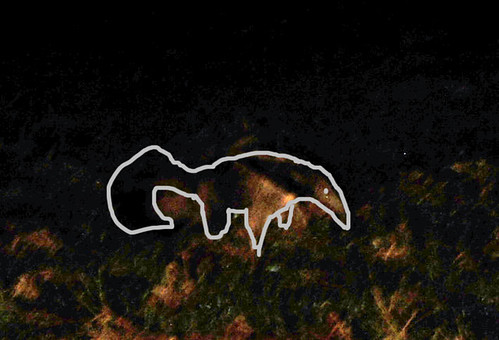
See? No? Does this help?

giant anteater outlined

Yeah. It wasn't the best of experience from a photography point of view but we got great looks at a spectacular mammal. Properly equipped photos should be no problem (though of course powerful flashes should be used on wild animals with caution and restraint with a view to the animals welfare). I saw no signs of stress behaviour in the animals we saw, they moved off but were on the move when first seen and there was no acceleration, they just bimbled off into the night.

It has to be said that this is a truly spectacular species and it has the sort of charisma that makes it one of those animals tourists will love to see (think whales and dolphins, south africa's penguins and so forth) whether they are nature-lovers or not. Hopefully at least some of the areas they exist will be able to find a way to run sustainable ant-eater trips which will encourage the protection of their habitats. Its worth noting that giant anteater is surprisingly widespread across south america and one would hope that this remains the case and it can continue to wander the continent's plains.


Wednesday, January 06, 2010

Wordless wednesday - Smooth-billed Ani

ani

I miss these little characters if for no other reason than that it was nice being able to ID a bird by voice alone.

Tuesday, January 05, 2010

FYI: 10,000 Birds Conservation Club is awesome!

So a while back the team at 10,000 Birds unleashed the 10,000 Birds Conservation Club on the world. I wanted to tell y'all about it then but no laptop meant no new blogging. Anyway now I'm back I thought I'd post a little something in case it had passed any of you by.


Photobucket


Basically US$25 gets you a twelve month membership. A twelve month membership gets you access to twelve months worth of competitions to win cool birding stuff like dvd's, books and who knows what else. By way of illustration I just won the Birds of the Western Palearctic and BBi dvds (which was pretty sweet). So far I've made joining the club sound rather like a sensible self-interested decision but better still, in addition to winning all that good stuff, your joining money will be used to fund worthy conservation projects helping endangered/critically endangered birds. More detail and all the important stuff can be found here. As a very satisfied member I recommend it!

Hermit crab house swap

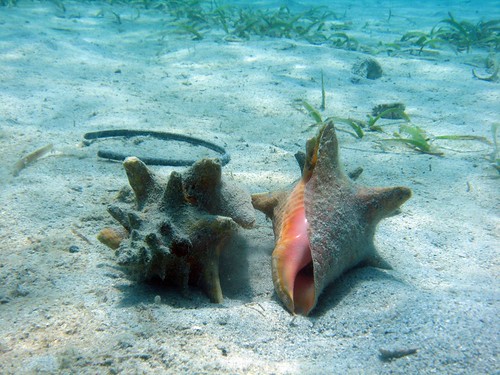
This is one of a load of photos I took at one of my favourite little spots in the caribbean. This area is a bay with a shallow sand slope with a fair bit of sea grass. There is a bar on the beach (nice) and a floating boat bar a little offshore so there are two jetties either side of the bay. The end result is that this is an excellent place to take beginner divers for the first "confined water" parts of an open water course. These are sessions teaching literally the first things you do in the water, in water you can stand up in and its essential skills like simply breathing from a regulator, clearing water from your mask when it floods and putting your regulator back in your mouth if it is knocked out. Whilst the instructors would do that, I would either help or (preferrably) explore the jetty pilings or sea grass for critters of which there are a surprising amount. Mostly we are talking about small sand/sea grass critters but I've seen plenty of big 'cuda, sting and eagle rays in there and the guys in the floating bar see shark reasonably regularly at night (unfortunately the boat traffic makes this not a great place to night dive). Anway on this little foray I found one of my favourite things to watch. It would make for a great photo sequence but unfortunately we had to leave before I got to the climax so you only get the one photo.....

hermit crab houseswap

In the conch on the left is a hermit crab - it has temporarily retreated. The shell on the right is bigger, cleaner and a little nicer so the crab was in the process of thinking about shifting. When they do this it is hilarious. Being out of its shell is high risk for a hermit crab with that soft juicy abdomen exposed so the change itself needs to be quick. However that new shell has been sat on the sand there for a while so you know there is going to be some sand or grit or worse another creature somewhere in that spiral. What you get therefore is a convoluted process of slow, methodical positioning of the new shell, cleaning and shaking to get the sand out and then a frantic switch. This is always (in my limited experience) followed by some body language that can only be described as the closest a hermit crab can come to showing irritation and discomfort and then another frantic switch, more shaking to get those last bits of sand out and yet another frantic switch. This can go on for some time. Alas that time is often longer than confined water introductory sessions so I got this initial shot and settled to watch what was coming when I was recalled to the boat. Gah! Next time.

Monday, January 04, 2010

New year's day birding

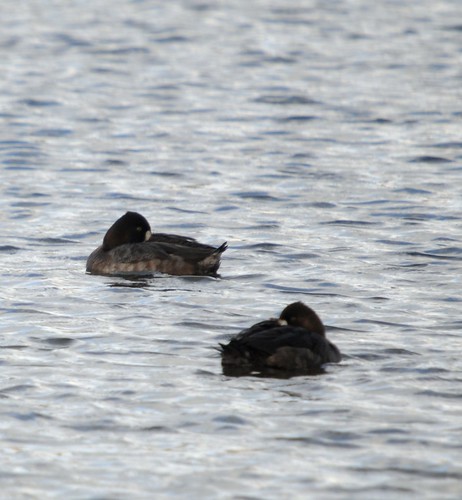
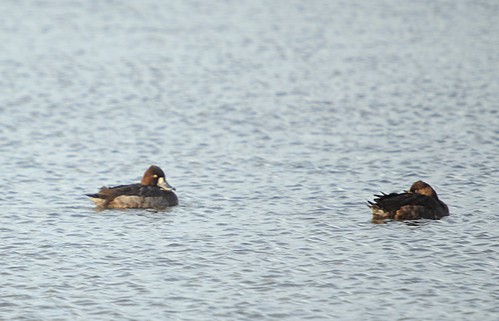
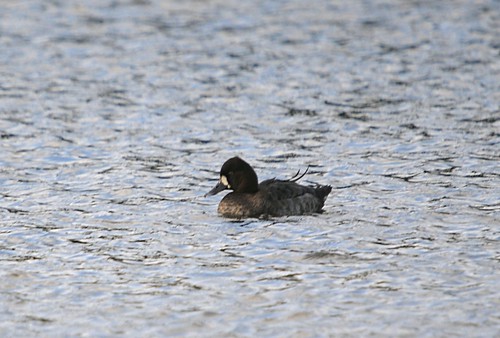
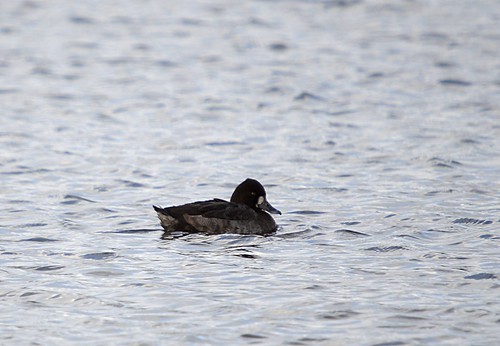
Like thousands of other nature lovers, I took the chance to get outside on New Year's day and enjoy the natural world with a couple of hours birding. No question what the birds of the day were; I finally got decent looks in good light at the Lesser Scaup that have been here since early December. With the sun (sort of) out, I took the opportunity to get some (sort of) in-focus shots.

lesser scaup4

There are a number of cool things about these birds. Firstly they are on the wrong side of the Atlantic which is cool but scaup seem to manage to do that fairly regularly as do a number of other American ducks. Slightly cooler though is the fact that whilst reasonably regular vagrants to mainland Britain, no Lesser Scaup have landed here on my little island before. The bird above is a national first....unless that is it touched down immediately after the bird below.

lesser scaup5

There are two of them. Getting lost and flying across the Atlantic is one thing. Doing it with a wingman in tow is something else. These two have been faithful to a couple of sites for a while now; I'd love to see them stay and moult into their adult plumage. Intriguingly they are both unsexable first winter birds. Wouldn't it be fantastic if we got a male and female that stuck into spring.....

lesser scaup3

There isn't much of the joy of spring about them at the moment though. The odd bit of diving was a rare interruption in the apparently vital lesser scaup business of kipping (synchronised kipping in this case).

lesser scaup

Seeing the relatively frequent vagrancy of certain American ducks (BWT, RND, scaup) makes me wonder how often our European ancestors encountered them before Columbus - did wetlanders bag an unusual duck from time to time and if so what did they think they were? Did they notice the differences? Did they taste the differences? Did they care? These were just some of my idle musings on a New Year's day afternoon.

Sunday, January 03, 2010

The lack of power of my prophecy

 So a while back I prophecised as to my next 10 island ticks. I predicted I'd see the following:
  1. Pintail
  2. Hen Harrier
  3. Short Eared Owl
  4. Goldcrest
  5. Firecrest
  6. Brambling
  7. Mediterranean Gull
  8. Woodcock
  9. Knot
  10. Great Crested Grebe
Since then I've bagged 10 more island ticks. They were:
  1. White-fronted goose
  2. Back-throated Diver
  3. Great Northern Diver
  4. Chiffchaff
  5. Firecrest
  6. Goldeneye
  7. Great Crested Grebe
  8. Pochard
  9. Waxwing
  10. Cattle Egret
Which means I hit 2/10. I should've predicted at least one of the divers and waxwing was pretty predictable once the weather hit oop north in mid-december. Cattle Egret and Pochard were both givens sooner or later but came sooner than I perhaps anticipated. Goldeneye and White-fronted goose are both rather more out of the ordinary here than on the mainland so were perhaps unpredictable.

In light of a) the colossal failure of the last set of picks and b) the tickfest that it precipitated, I've decided to repeat the exercise for another ten and see if I can do better. Interestingly I can now do so with some assistance. The BUBO listing website can now produces a target list of species most likely to occur in your region based on how many other listers in your region have seen birds you haven't. According to BUBO I should be expecting:

  1. Red-legged Partridge,
  2. Eurasian Hobby,
  3. Curlew Sandpiper,
  4. Purple Sandpiper,
  5. Common Tern
  6. European Turtle Dove
  7. Whinchat
  8. Cetti's Warbler
  9. Sedge Warbler
  10. Blackcap
  11. Dartford Warbler
  12. Goldcrest
  13. Common Bullfinch
 But am I? Not exactly. This is my predicted next 10 and why:
  1. Goldcrest - plenty around if I can just clap eyes on one.
  2. Brambling - sooner or later one of these chaffinches I'm grilling will be a brambling.
  3. Mediterranean Gull - sooner or later one of these black-headed gulls I'm grilling will be a med-gull.
  4. Woodcock - cold weather should push these south soonish. My dad has been seeing quite a few already.
  5. Long-tailed duck - as I write this, there is a long-staying drake in one of the coastal bays. Today I realised the reason I keep dipping it is because I've been looking in the wrong bay. Hopefully this essential revision to my twitching plan of attack should yield results.
  6. Curlew Sandpiper - BUBO is right, statistically I should hit one of these soonish.
  7. Purple Sandpiper- see Curlew sand.
  8. Common Tern - I have no idea why this isn't on my list yet.
  9. Blackcap - this wiill require some focus on my part, being small and a bit drab but is very doable.
  10. Slavonian Grebe - now that I love seawatching so much I'm bound to get one of these!
I've left out the summery birds from the BUBO list as I reckon I'll get these 10 pretty quick. Red-legged partridge are put down by shoots and I don't think they are as common as they used to be so that could turn into a blocker. Keep tuning in to see how wrong I turn out to be for the next 10.

Tuesday, December 29, 2009

Butterflied

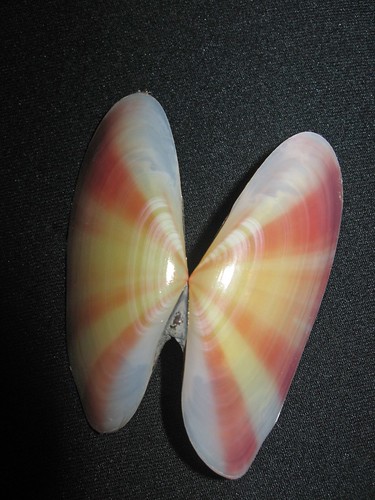
Its exceedingly rare that I'd take any souvenirs from a dive - probably a reaction from having to explain underwater to halfwitted tourists that that nice shell they just tried to pocket is alive too many times but I saw this dead bivalve and had to bring it up with me for a photo on dry land.

shell

Once it had dried out I kind of kept expecting it to flap a few times then fly away.

Monday, December 28, 2009

10 of the best from 2009

Its reached that time of year again where I list the 10 best nature moments of the past year for me. A few of these haven't featured on the blog yet but will and a few haven't and won't as they weren't really photo opportunities but they were favourites:
  1. Giant anteaters across the Savannah
  2. River dolphins and sundowners on the Orinoco
  3. Chilling with a beverage in the Signature Lounge of the John Hancock Tower in Chicago, looking out to enjoy the view and spotting a peregrine at eye level which suddenly went into a full stoop dive allowing us a unique perspective on the fastest bird in the world.
  4. Great views of the biggest lizard in the Americas from the lap of luxury on Guana Island
  5. Anaconda!
  6. Self-found Burmese Python (and its great supporting cast)!
  7. My last dive in the Caribbean; sharks, sting rays, turtles and then, in the last 30 seconds of the dive, the biggest eagle ray I have ever seen.
  8. Watching the distinctive twin dorsal fins of a big female lemon shark break the surface downwater from our chum trail in the Florida keys.
  9. My first tapir sighting, Venezuela.
  10. Riding an interisland ferry and seeing the huge head of a leatherback turtle slide underwater off the starboard bow, Virgin Islands.
It was definately a reptile year for me this year. Almost all the big moments were in some way related to reptiles or in reptile habitat. I doubt the same will be the case next year but we will have to see what the year has in store. I'm not going to meme the list this year but feel free to add links to your top tens in the comments if so minded.

Thursday, December 24, 2009

Saturday, December 19, 2009

Urgh

Computer is down again so I'm taking a christmas blog break - I'll be back after the holidays with some cool stuff all being well. Happy holidays everyone.

Friday, December 18, 2009

Thomas and Charlie's Ceratozamia

Because cycads are so long lived and are often maintained for years by the same facilities, stories surrounding individuals and certain species often crop up, with strange relationships and odd little plant histories. By way of example, one Ceratozamia species was recently validated when the original type specimen from which the plant was described was found growing in the same botanic garden from which it was described a hundred years on. Another example is the tale of Thomas and Charlie. Below is a specimen of a Ceratozamia form that many grew for many a year under the name "Thomas and Charlie". It wasn't a described species and many presumed the name to commemorate the collectors of the original seed or an importer or so on.

ceratozamia [mexicana] 'tomazunchale'

In fact the name originates from quite the linguistic mix-up. You see the original collection was made in the area surrounding Tamazunchale in the Mexican state of San Luis Potosi. Its not hard to imagine how, in the space of a couple of phone calls and verbal descriptions of the plant, the name could get corrupted by someone unfamiliar with Mexican geography. This is a coning female by the way and Cz. 'Tamazunchale'/'Thomas and Charlie' is now considered by many to be a unique form of Ceratozamia mexicana as opposed to its own species.

Tuesday, December 15, 2009

I never picked cotton....

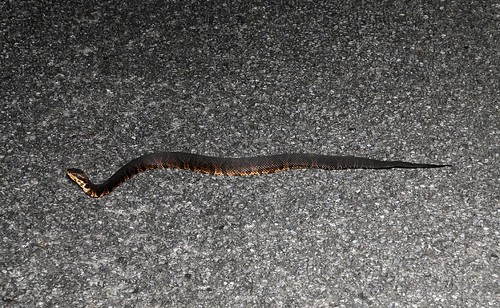
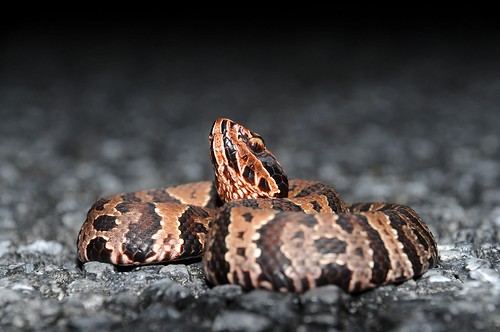
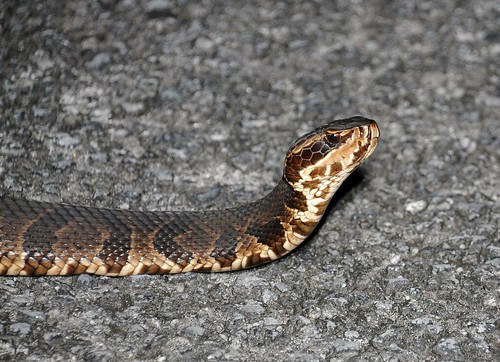
It wasn't all big and little constrictors in Florida - I did come across some venomous. Below is an adult Florida Cottonmouth. If you listen to the tall tales about this species you may be surprised to learn it didn't chase me down, jump up and sink its fangs into my throat. This is a snake with a seriously bad reputation. In fact it was pretty chilled out probably because it knew what it was capable of.

cottonmouth1

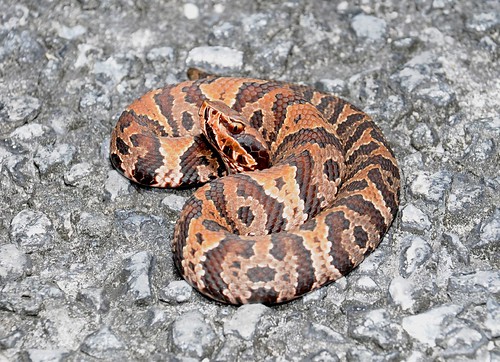
Far more exciting than the big ones though are the beautiful youngsters, how stunning is this guy?

cottonmouth9

The youngsters all show these bold patterns and a beautiful chartreuse tail which may act as a caudal lure. Unfortunately you can't see that here as it adopted this defensive posture. The bigger one's don't coil like this so much - they just lay out and tip their heads. The name cottonmouth is derived from their white mouth. When really worried by something they will gape wide showing that off - hence one of their other colloquial names; trapdoor viper.

cottonmouth2

I can understand why people are concerned or afraid of sharing space with the larger north american pit vipers; a bite from one of these would be no fun. Especially if your health insurance coverage wasn't up to much. That said I can't imagine how anyone could miss the majesty and dignity of an animal like a big, healthy, fat cotton like the one above or the elegance of a juvenile like that below.

juv cotton2

These are primarily snakes of the wetland areas - the latin name hints at their fish-eating ways and they'll also take frogs and toads as well as small mammals if they get the chance. One to watch out for and enjoy by the bayous, 'glades, ditches and ponds.

Monday, December 14, 2009

Caribbean snow.

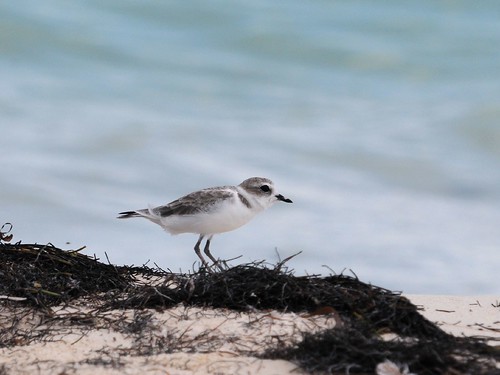
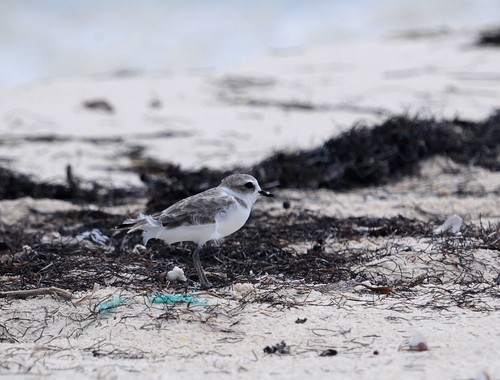
There's a much better chance of having a white christmas now I've left the caribbean but we still used to get the odd bit of snow out there: Snowy plovers.....

snowy plover

These were very rare residents for us but there was one corner of one beach on one island that would always come up with the goods. I have seen fledglings there when not with camera but I suspect we probably wouldn't get more than 2 pairs breeding a year. The last time I visited, there were two working the beach together with a few other waders. These pictures don't really show how small these guys are. Very diminutive but also long-legged and light-bodied looking birds, not as "dumpy" as some of the other species in the same genus.

snowy plover2

You can probably see the blue string and the odd bit of plastic amongst the jetsam (or is it flotsam?) on the tide line. This beach is about as far from anywhere as its possible to get in the caribbean and yet the rubbish still washes up every day.