Thursday, January 07, 2010

Big anteaters, bad photos and sustainable tourism

So when I first began the Venezuela posts I mentioned that a number of nature bloggers had recently seen similar stuff in Guyana and that my Venezuela posts would cover similar taxa to Julie's Guyana posts (though inevitably less eloquently). The Venezuela posts continue to be strung out but this post covers an area Julie covered and provides an interesting contrast between our two experience that I thought warranted detailed comparison. Way back in January 2009 Julie posted two posts about her trip to see Giant Anteaters on Guayana's savannah. You can read those here and here and I'd recommend you do so. The gist of Julie's experience was, on my reading of her account, that they drove around the Savannah in the morning looking for anteaters and upon finding one it was pursued by vehicle and ultimately herded on foot towards the viewers. This was apparently a rather stressful looking exercise and concerns were (it would seem rightly) raised about the sustainability and ethicality of such methodology. My giant anteater experience was rather different hence this post. Before we get to methodology lets look to results. Did we see anteaters? Yes. Yes we did. In fact we saw eleven (11!) of them. Which was nice.

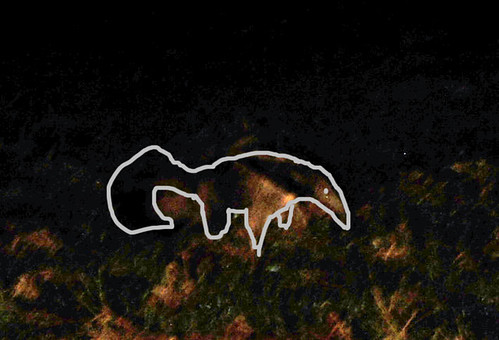
The methodology used at Hato el Cedral involves looking for the anteaters at night. This has two benefits. Firstly the anteaters are active at night so they are easy to find, on the move and already active so not being woken. Secondly the other nocturnal stuff is out and about too including owls and nightjar and foxes for us as well as potentially the weird fluffy arboreal anteater and a range of cats (puma was sighted the night we arrived, ocelot is apparently seen reasonably frequently and whilst not yet seen there is no reason to rule out jaguar as a possible). Plus amphibians, snakes and similar stuff of course. The basic technique will not be unfamiliar to most. You drive around in the bed of a pick-up scanning around with a spotlight until you see reflected eyeshine whereupon you head in that direction for a closer look. With fences and ditches of crocs dotted around the farm there is no question of pursuing anything off road so you get close enough for good views and then the beast leisurely trots off back into the dark. We did try approaching one (presumed - it would've been the twelfth) anteater on foot for better photos and whatever it was disappeared completely (which was a little scary). There is of course a disadvantage - you're in the dark. This raises some issues with photography. I had anticipated the need for flash in advance and bought a nikon external flash with me. Unfortunately it proved to be ideally suited for illuminating little girl's tea parties as opposed to beasts lurking in the distant gloom and hence my photos were all rubbish. Nonetheless here, after a hefty amount of photoshop, is a venezuelan giant anteater:
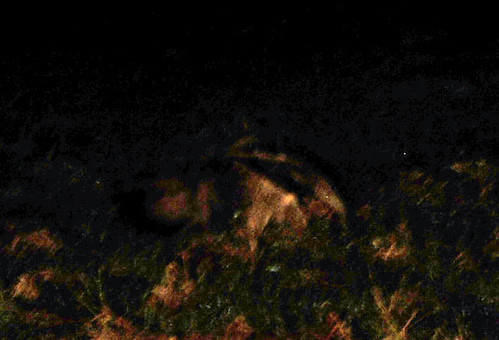
giant anteater

See? No? Does this help?

giant anteater outlined

Yeah. It wasn't the best of experience from a photography point of view but we got great looks at a spectacular mammal. Properly equipped photos should be no problem (though of course powerful flashes should be used on wild animals with caution and restraint with a view to the animals welfare). I saw no signs of stress behaviour in the animals we saw, they moved off but were on the move when first seen and there was no acceleration, they just bimbled off into the night.

It has to be said that this is a truly spectacular species and it has the sort of charisma that makes it one of those animals tourists will love to see (think whales and dolphins, south africa's penguins and so forth) whether they are nature-lovers or not. Hopefully at least some of the areas they exist will be able to find a way to run sustainable ant-eater trips which will encourage the protection of their habitats. Its worth noting that giant anteater is surprisingly widespread across south america and one would hope that this remains the case and it can continue to wander the continent's plains.


Wednesday, January 06, 2010

Wordless wednesday - Smooth-billed Ani

ani

I miss these little characters if for no other reason than that it was nice being able to ID a bird by voice alone.

Tuesday, January 05, 2010

FYI: 10,000 Birds Conservation Club is awesome!

So a while back the team at 10,000 Birds unleashed the 10,000 Birds Conservation Club on the world. I wanted to tell y'all about it then but no laptop meant no new blogging. Anyway now I'm back I thought I'd post a little something in case it had passed any of you by.


Photobucket


Basically US$25 gets you a twelve month membership. A twelve month membership gets you access to twelve months worth of competitions to win cool birding stuff like dvd's, books and who knows what else. By way of illustration I just won the Birds of the Western Palearctic and BBi dvds (which was pretty sweet). So far I've made joining the club sound rather like a sensible self-interested decision but better still, in addition to winning all that good stuff, your joining money will be used to fund worthy conservation projects helping endangered/critically endangered birds. More detail and all the important stuff can be found here. As a very satisfied member I recommend it!

Hermit crab house swap

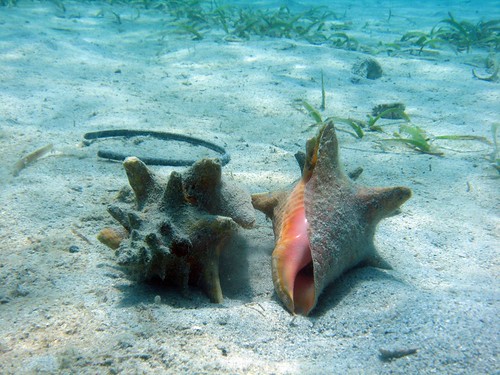
This is one of a load of photos I took at one of my favourite little spots in the caribbean. This area is a bay with a shallow sand slope with a fair bit of sea grass. There is a bar on the beach (nice) and a floating boat bar a little offshore so there are two jetties either side of the bay. The end result is that this is an excellent place to take beginner divers for the first "confined water" parts of an open water course. These are sessions teaching literally the first things you do in the water, in water you can stand up in and its essential skills like simply breathing from a regulator, clearing water from your mask when it floods and putting your regulator back in your mouth if it is knocked out. Whilst the instructors would do that, I would either help or (preferrably) explore the jetty pilings or sea grass for critters of which there are a surprising amount. Mostly we are talking about small sand/sea grass critters but I've seen plenty of big 'cuda, sting and eagle rays in there and the guys in the floating bar see shark reasonably regularly at night (unfortunately the boat traffic makes this not a great place to night dive). Anway on this little foray I found one of my favourite things to watch. It would make for a great photo sequence but unfortunately we had to leave before I got to the climax so you only get the one photo.....

hermit crab houseswap

In the conch on the left is a hermit crab - it has temporarily retreated. The shell on the right is bigger, cleaner and a little nicer so the crab was in the process of thinking about shifting. When they do this it is hilarious. Being out of its shell is high risk for a hermit crab with that soft juicy abdomen exposed so the change itself needs to be quick. However that new shell has been sat on the sand there for a while so you know there is going to be some sand or grit or worse another creature somewhere in that spiral. What you get therefore is a convoluted process of slow, methodical positioning of the new shell, cleaning and shaking to get the sand out and then a frantic switch. This is always (in my limited experience) followed by some body language that can only be described as the closest a hermit crab can come to showing irritation and discomfort and then another frantic switch, more shaking to get those last bits of sand out and yet another frantic switch. This can go on for some time. Alas that time is often longer than confined water introductory sessions so I got this initial shot and settled to watch what was coming when I was recalled to the boat. Gah! Next time.

Monday, January 04, 2010

New year's day birding

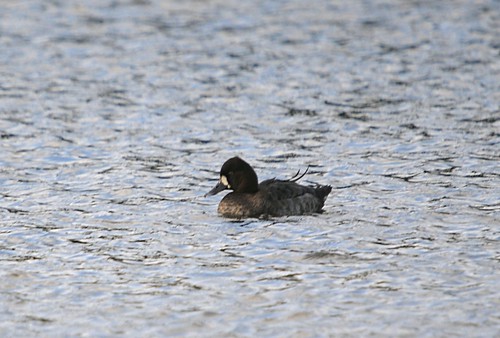
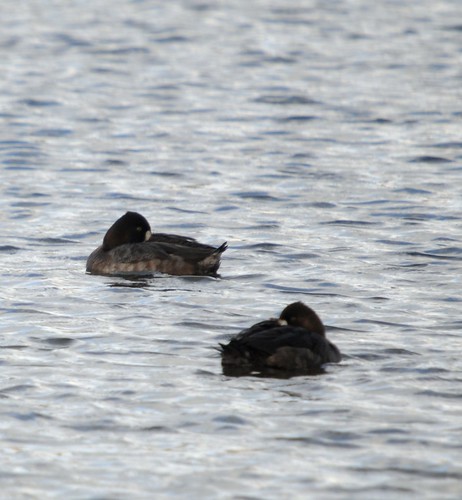
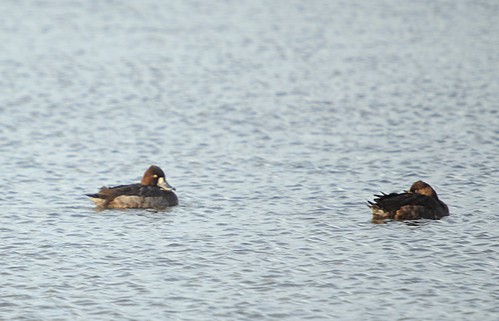
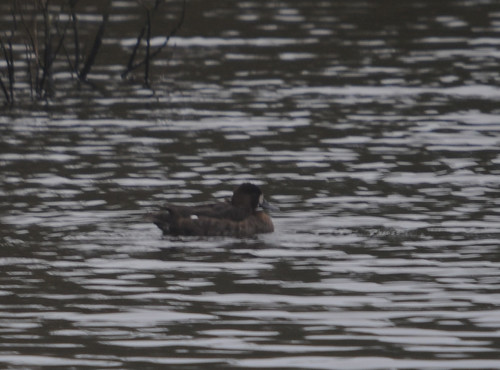
Like thousands of other nature lovers, I took the chance to get outside on New Year's day and enjoy the natural world with a couple of hours birding. No question what the birds of the day were; I finally got decent looks in good light at the Lesser Scaup that have been here since early December. With the sun (sort of) out, I took the opportunity to get some (sort of) in-focus shots.

lesser scaup4

There are a number of cool things about these birds. Firstly they are on the wrong side of the Atlantic which is cool but scaup seem to manage to do that fairly regularly as do a number of other American ducks. Slightly cooler though is the fact that whilst reasonably regular vagrants to mainland Britain, no Lesser Scaup have landed here on my little island before. The bird above is a national first....unless that is it touched down immediately after the bird below.

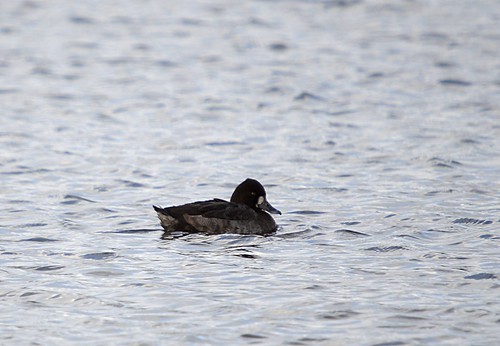
lesser scaup5

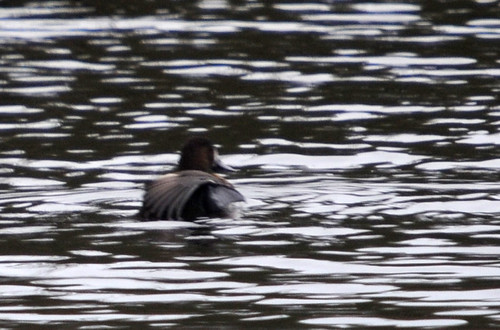
There are two of them. Getting lost and flying across the Atlantic is one thing. Doing it with a wingman in tow is something else. These two have been faithful to a couple of sites for a while now; I'd love to see them stay and moult into their adult plumage. Intriguingly they are both unsexable first winter birds. Wouldn't it be fantastic if we got a male and female that stuck into spring.....

lesser scaup3

There isn't much of the joy of spring about them at the moment though. The odd bit of diving was a rare interruption in the apparently vital lesser scaup business of kipping (synchronised kipping in this case).

lesser scaup

Seeing the relatively frequent vagrancy of certain American ducks (BWT, RND, scaup) makes me wonder how often our European ancestors encountered them before Columbus - did wetlanders bag an unusual duck from time to time and if so what did they think they were? Did they notice the differences? Did they taste the differences? Did they care? These were just some of my idle musings on a New Year's day afternoon.

Sunday, January 03, 2010

The lack of power of my prophecy

 So a while back I prophecised as to my next 10 island ticks. I predicted I'd see the following:
  1. Pintail
  2. Hen Harrier
  3. Short Eared Owl
  4. Goldcrest
  5. Firecrest
  6. Brambling
  7. Mediterranean Gull
  8. Woodcock
  9. Knot
  10. Great Crested Grebe
Since then I've bagged 10 more island ticks. They were:
  1. White-fronted goose
  2. Back-throated Diver
  3. Great Northern Diver
  4. Chiffchaff
  5. Firecrest
  6. Goldeneye
  7. Great Crested Grebe
  8. Pochard
  9. Waxwing
  10. Cattle Egret
Which means I hit 2/10. I should've predicted at least one of the divers and waxwing was pretty predictable once the weather hit oop north in mid-december. Cattle Egret and Pochard were both givens sooner or later but came sooner than I perhaps anticipated. Goldeneye and White-fronted goose are both rather more out of the ordinary here than on the mainland so were perhaps unpredictable.

In light of a) the colossal failure of the last set of picks and b) the tickfest that it precipitated, I've decided to repeat the exercise for another ten and see if I can do better. Interestingly I can now do so with some assistance. The BUBO listing website can now produces a target list of species most likely to occur in your region based on how many other listers in your region have seen birds you haven't. According to BUBO I should be expecting:

  1. Red-legged Partridge,
  2. Eurasian Hobby,
  3. Curlew Sandpiper,
  4. Purple Sandpiper,
  5. Common Tern
  6. European Turtle Dove
  7. Whinchat
  8. Cetti's Warbler
  9. Sedge Warbler
  10. Blackcap
  11. Dartford Warbler
  12. Goldcrest
  13. Common Bullfinch
 But am I? Not exactly. This is my predicted next 10 and why:
  1. Goldcrest - plenty around if I can just clap eyes on one.
  2. Brambling - sooner or later one of these chaffinches I'm grilling will be a brambling.
  3. Mediterranean Gull - sooner or later one of these black-headed gulls I'm grilling will be a med-gull.
  4. Woodcock - cold weather should push these south soonish. My dad has been seeing quite a few already.
  5. Long-tailed duck - as I write this, there is a long-staying drake in one of the coastal bays. Today I realised the reason I keep dipping it is because I've been looking in the wrong bay. Hopefully this essential revision to my twitching plan of attack should yield results.
  6. Curlew Sandpiper - BUBO is right, statistically I should hit one of these soonish.
  7. Purple Sandpiper- see Curlew sand.
  8. Common Tern - I have no idea why this isn't on my list yet.
  9. Blackcap - this wiill require some focus on my part, being small and a bit drab but is very doable.
  10. Slavonian Grebe - now that I love seawatching so much I'm bound to get one of these!
I've left out the summery birds from the BUBO list as I reckon I'll get these 10 pretty quick. Red-legged partridge are put down by shoots and I don't think they are as common as they used to be so that could turn into a blocker. Keep tuning in to see how wrong I turn out to be for the next 10.

Tuesday, December 29, 2009

Butterflied

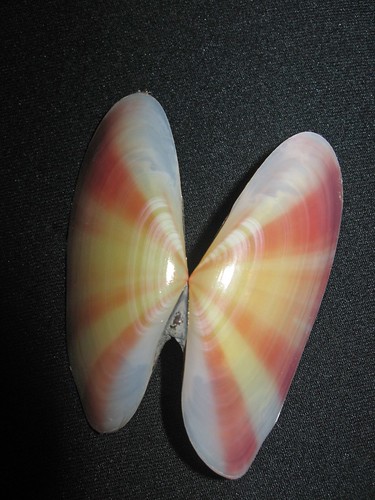
Its exceedingly rare that I'd take any souvenirs from a dive - probably a reaction from having to explain underwater to halfwitted tourists that that nice shell they just tried to pocket is alive too many times but I saw this dead bivalve and had to bring it up with me for a photo on dry land.

shell

Once it had dried out I kind of kept expecting it to flap a few times then fly away.

Monday, December 28, 2009

10 of the best from 2009

Its reached that time of year again where I list the 10 best nature moments of the past year for me. A few of these haven't featured on the blog yet but will and a few haven't and won't as they weren't really photo opportunities but they were favourites:
  1. Giant anteaters across the Savannah
  2. River dolphins and sundowners on the Orinoco
  3. Chilling with a beverage in the Signature Lounge of the John Hancock Tower in Chicago, looking out to enjoy the view and spotting a peregrine at eye level which suddenly went into a full stoop dive allowing us a unique perspective on the fastest bird in the world.
  4. Great views of the biggest lizard in the Americas from the lap of luxury on Guana Island
  5. Anaconda!
  6. Self-found Burmese Python (and its great supporting cast)!
  7. My last dive in the Caribbean; sharks, sting rays, turtles and then, in the last 30 seconds of the dive, the biggest eagle ray I have ever seen.
  8. Watching the distinctive twin dorsal fins of a big female lemon shark break the surface downwater from our chum trail in the Florida keys.
  9. My first tapir sighting, Venezuela.
  10. Riding an interisland ferry and seeing the huge head of a leatherback turtle slide underwater off the starboard bow, Virgin Islands.
It was definately a reptile year for me this year. Almost all the big moments were in some way related to reptiles or in reptile habitat. I doubt the same will be the case next year but we will have to see what the year has in store. I'm not going to meme the list this year but feel free to add links to your top tens in the comments if so minded.

Thursday, December 24, 2009

Saturday, December 19, 2009

Urgh

Computer is down again so I'm taking a christmas blog break - I'll be back after the holidays with some cool stuff all being well. Happy holidays everyone.

Friday, December 18, 2009

Thomas and Charlie's Ceratozamia

Because cycads are so long lived and are often maintained for years by the same facilities, stories surrounding individuals and certain species often crop up, with strange relationships and odd little plant histories. By way of example, one Ceratozamia species was recently validated when the original type specimen from which the plant was described was found growing in the same botanic garden from which it was described a hundred years on. Another example is the tale of Thomas and Charlie. Below is a specimen of a Ceratozamia form that many grew for many a year under the name "Thomas and Charlie". It wasn't a described species and many presumed the name to commemorate the collectors of the original seed or an importer or so on.

ceratozamia [mexicana] 'tomazunchale'

In fact the name originates from quite the linguistic mix-up. You see the original collection was made in the area surrounding Tamazunchale in the Mexican state of San Luis Potosi. Its not hard to imagine how, in the space of a couple of phone calls and verbal descriptions of the plant, the name could get corrupted by someone unfamiliar with Mexican geography. This is a coning female by the way and Cz. 'Tamazunchale'/'Thomas and Charlie' is now considered by many to be a unique form of Ceratozamia mexicana as opposed to its own species.

Tuesday, December 15, 2009

I never picked cotton....

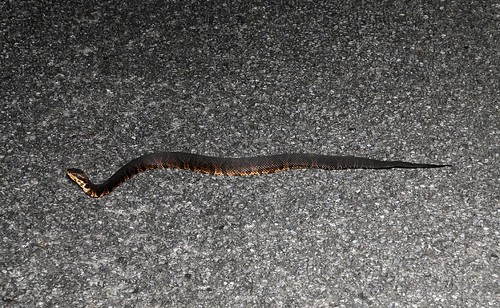
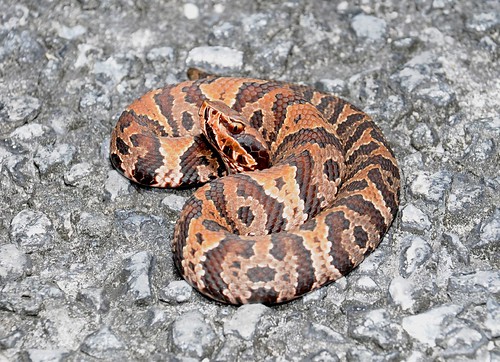
It wasn't all big and little constrictors in Florida - I did come across some venomous. Below is an adult Florida Cottonmouth. If you listen to the tall tales about this species you may be surprised to learn it didn't chase me down, jump up and sink its fangs into my throat. This is a snake with a seriously bad reputation. In fact it was pretty chilled out probably because it knew what it was capable of.

cottonmouth1

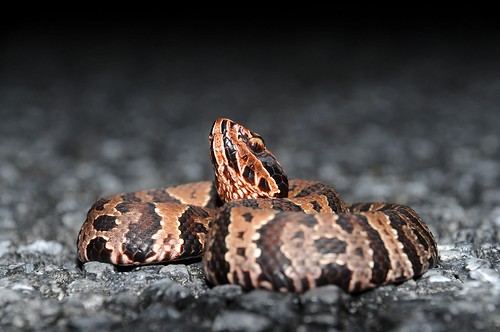
Far more exciting than the big ones though are the beautiful youngsters, how stunning is this guy?

cottonmouth9

The youngsters all show these bold patterns and a beautiful chartreuse tail which may act as a caudal lure. Unfortunately you can't see that here as it adopted this defensive posture. The bigger one's don't coil like this so much - they just lay out and tip their heads. The name cottonmouth is derived from their white mouth. When really worried by something they will gape wide showing that off - hence one of their other colloquial names; trapdoor viper.

cottonmouth2

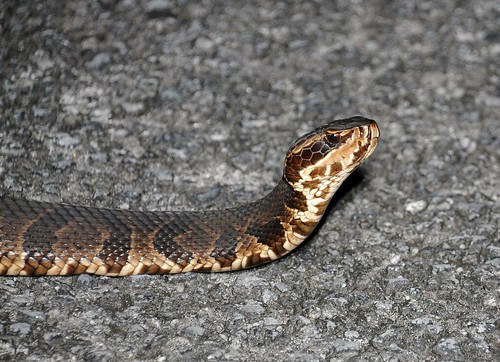
I can understand why people are concerned or afraid of sharing space with the larger north american pit vipers; a bite from one of these would be no fun. Especially if your health insurance coverage wasn't up to much. That said I can't imagine how anyone could miss the majesty and dignity of an animal like a big, healthy, fat cotton like the one above or the elegance of a juvenile like that below.

juv cotton2

These are primarily snakes of the wetland areas - the latin name hints at their fish-eating ways and they'll also take frogs and toads as well as small mammals if they get the chance. One to watch out for and enjoy by the bayous, 'glades, ditches and ponds.

Monday, December 14, 2009

Caribbean snow.

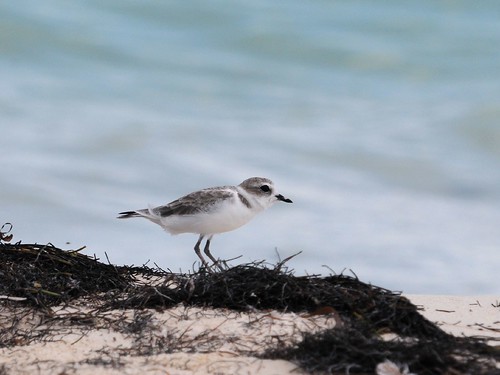
There's a much better chance of having a white christmas now I've left the caribbean but we still used to get the odd bit of snow out there: Snowy plovers.....

snowy plover

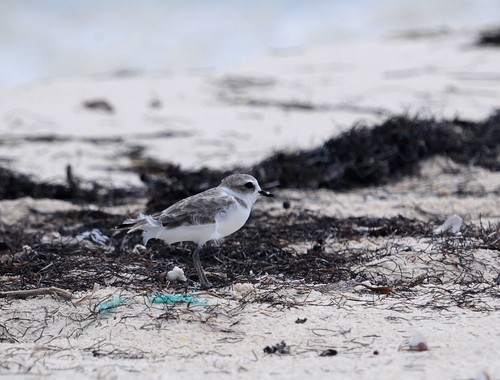
These were very rare residents for us but there was one corner of one beach on one island that would always come up with the goods. I have seen fledglings there when not with camera but I suspect we probably wouldn't get more than 2 pairs breeding a year. The last time I visited, there were two working the beach together with a few other waders. These pictures don't really show how small these guys are. Very diminutive but also long-legged and light-bodied looking birds, not as "dumpy" as some of the other species in the same genus.

snowy plover2

You can probably see the blue string and the odd bit of plastic amongst the jetsam (or is it flotsam?) on the tide line. This beach is about as far from anywhere as its possible to get in the caribbean and yet the rubbish still washes up every day.

Friday, December 11, 2009

multicoloured redwoods

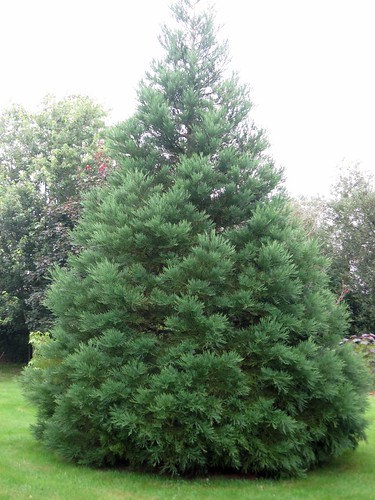
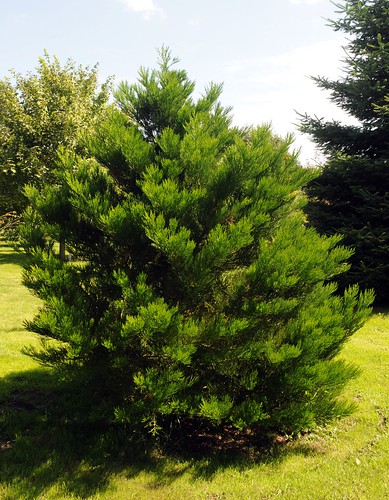
When we got the chance to plant a little arboretum, the redwoods and other primitive things featured heavily - 12 or so years since the first plants went in here's a few pics (some of these plants are a lot younger than 12 though). Some of the images are bigger than others as they just didn't downsize and retain any detail I'm afraid. So this is the standard Giant Sequoia, Sequoiadendron giganteum in the arboretum as a colour control.....

sequoiadendron

and this is Sequoiadendron giganteum "greenpeace" which, unsurprisingly is green....

sequoiadendron greenpeace

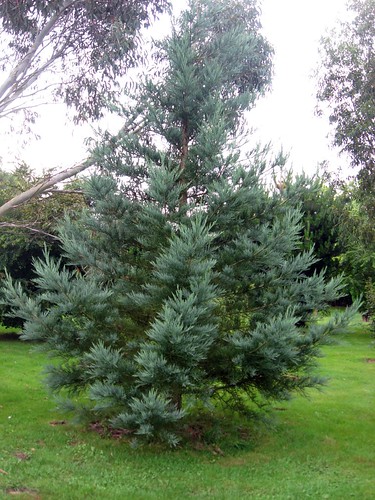
but this is my favourite form in our collection Sequoiadendron giganteum "hazel steel". I found 2 of these in a nurseries discount clearance section for 4 quid. nice! The tree itself.....

hazelsteel2

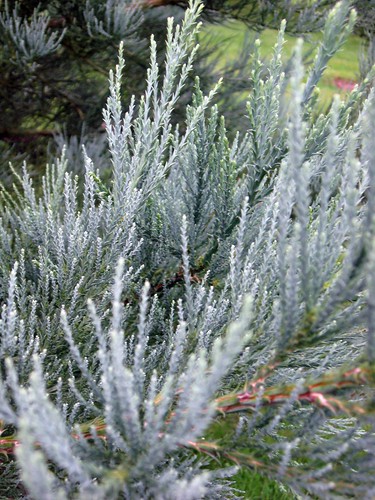
A close up on the fabulous blue needles....

hazelsteel

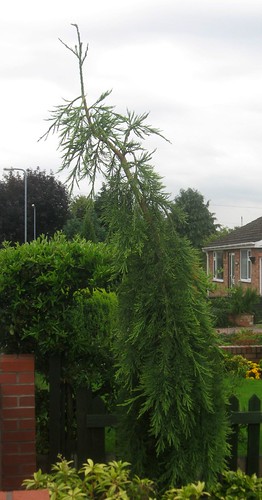
We're not the only ones with a Sequoiadendron taste though. I spotted this in a front garden down the street which I believe is either S. giganteum pendula or barbarits requiem.

pendula

If it is either of those trees, a front garden is probably not the ideal place for it but who am I to judge?

Thursday, December 10, 2009

Agouti

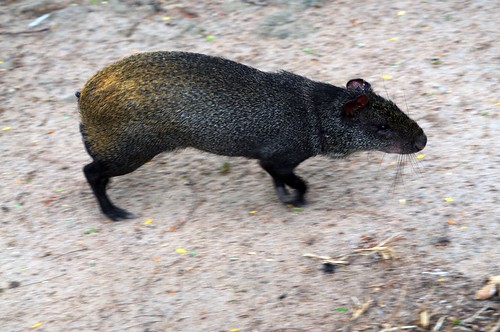
Another mammal from Hato el cedral's garden and pool. This is an agouti and a very tame one at that. I suspect he was probably habituated to humans as a rescued baby as he was happy to approach people and liked having a scratch (which triggered a bizzare trembling behaviour). The hair of these is very coarse and wiry interestingly.

agouti

Agouti are fairly big rodents; fruit and seed eaters which disperse rainforest fruit and provide food for a variety of species including humans. In fact, as this one shows, they can be quasi-domesticated and as a result of this local tribes introduced them to a number of Caribbean islands including Grand Cayman as a food source (rabbits arrived in England in the same way ).

There was another mammal in the garden, a species of armadillo. Unfortunately I didn't get shots of it for a very good reasons. What were those reasons you ask? Well I'll tell you. I first saw an armadillo trundle across the lawn as I left the room to go to breakfast. I grabbed my camera and discovered that, due to the rooms aircon, all I got were steamy window shots. of a grey blob. I relaxed, convinced I'd see another and mentioned it to our guide. No worries says he, there is a nearby field where they are plentiful. We'll drive through it on the way out this morning and get plenty of shots.....and so it came to pass that we were driving through a grass field sat in the back of an open-backed safari truck when all hell broke loose. I became vaguely aware of a few insects buzzing around and suddenly our guide, Rafael, was flicking frantically at his hair and banging on the back of the truck cab shouting "GO! GO! GO!". It took me a moment to assess what was happening and then the penny dropped - we had disturbed and were now under attack from a swarm of Africanised or Killer Bees! I pulled my fiancee to the opposite side of the cab from Raphael - he'd already been stung and I knew the bees released a pheromone when they stung that effectively instructs all the other bees to target this spot - I determined we should be as far away from that spot as possible. Discretion truly is the better part of valour. Behind the truck, a black swarm looking remarkably like that which would feature in a cartoon was tracking us. The truck was now doing about 45mph across a very bumpy field and the main goal now was not to fall out and get left with the bees! We eventually put space between us and the bees and regrouped. Raphael had taken 7 or 8 stings, the missus 1 and the driver and I had somehow come out unscathed. Had we been on foot we'd have been absolutely screwed. As it was we let the armadillos have that field to themselves. I think the experience may have limited the chances of my persuading my better half to let me have a beehive somewhat too.

Wednesday, December 09, 2009

Tuesday, December 08, 2009

A funny coincidence.

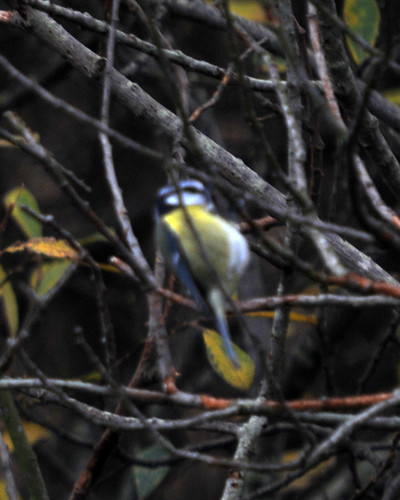
So remember how I was pondering the vagaries of listing as a result of my (failed, multiple) attempts at twitching a vagrant american duck (and national first) at a time when I didn't have blue tit on my list? Well yesterday as I passed the reservoir I noticed some birders parked up and when I stopped a kindly gentleman pointed to something hidden in the bushes which eventually resolved itself into this:

lesser scaup2

Lesser scaup, Aythya affinis, although I prefer the colloquial name Little Bluebill (according to wikipedia). So I got my lost yank duck after all and still with no blue tit on my list.

lesser scaup

Just then a flock of long-tailed tits flew past into the surrounding trees and with them was this little chap.

BT

Not the best photos of either species but a fabulous coincidence n'est-ce pas?

Ghost cycads in the sky

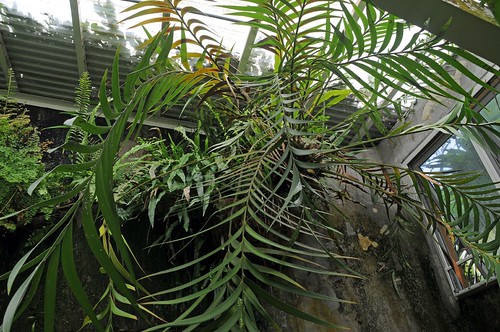
Obviously the true plantsman (or plantswoman) is not going to settle for a hanging basket of trailing petunias when there are so many awesome plants in the world and cycad fans are lucky enough to have an epiphyte of their very own to address the hanging basket issue. This is Zamia pseudoparasitica, a cycad that lives in trees!

zamia pseudoparasitica

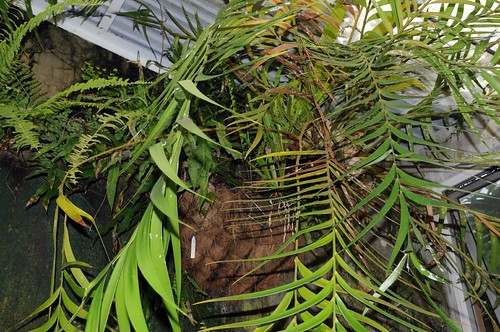
Interestingly there is an argument this is not a true epiphyte, in the wild Z. pseudoparasitica produces a huge and long tap root that finds its way down to the ground. Apparently big one's often fall off the opposite side of their branch to their tap roots with the result they end up hanging upside down by a single root just below their branch. There is a paper on the subject here with some amazing and bizarre photos.

zamia psuedoparasitica4

Why "ghost cycad" in the title (other than then obvious lyrical reference)? Surely its not another endangered cycad? Well in this case the ghost refers to the memory of another specimen alongside this one. This was taken at Fairchild Tropical Garden which, in the aftermath of a Hurricane a few years ago cleared itself up to find a few very rare cycads had apparently been stolen to order - at least one of these was part of the lost batch.

zamia psuedoparasitica3

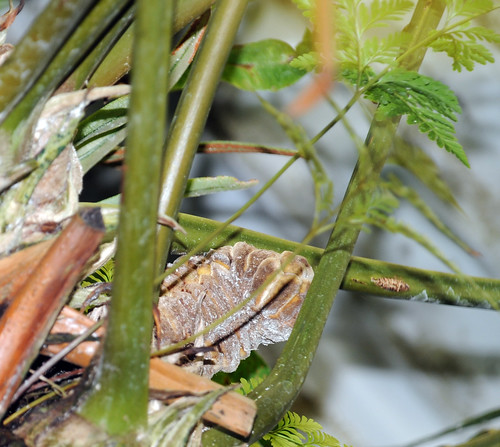
That is not to say this species is safe in the wild; it is not and it is also (obviously) habitat dependent in a way many other species are not. Happily this one had a cone on it. To me, this looks like a female cone which has been fertilised (hence the slightly lopsided shape where some ova have been fertilised and others haven't) but I could be wrong - obviously at height it wasn't easy to look at.

Monday, December 07, 2009

King Rat

So having shared some photos of, and raved about, Florida's beautiful corn snakes I must make a confession, the corns were not my favourite of the week's snakes (nor were the pythons), hell - they weren't even my favourite rat snakes of the week. Why? Well because from the moment I saw it, this was always going to be the top critter of the week.

ratsnake4

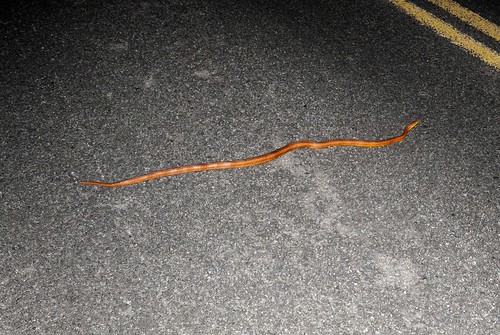
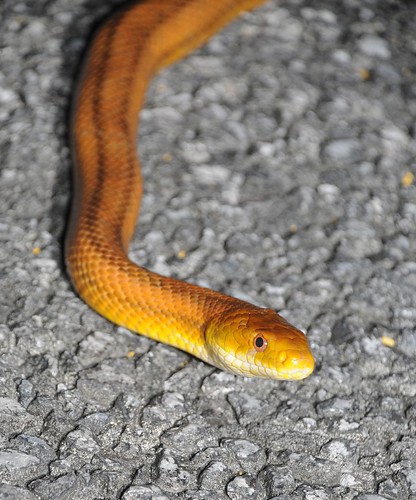
As you can probably guess from its size in comparison with the yellow lines; this was a pretty big snake. To be a little more specific this is a pretty big Everglades Rat Snake, Elaphe obsoleta rossalleni. I probably don't have to tell you that seeing a fat 5 foot bright orange snake in your headlights as you drive a quiet road is a pretty awesome sight. I think that is part of the reason I enjoyed this one so much - it was so spectacularly obvious as to be almost unbelievable which was how I felt about my first experience of proper roadcruising: I couldn't believe it was so easy and so much fun.

ratsnake

'Glades rats are (depending upon whose taxonomy you listen to) a subsepecies of the black rat snake and so are technically the same species as that monster grey rat snake that FC posts from time to time though it looks completely different. It would live a similar life too cruising the forest eating small rodents and reptiles and making the odd foray for nestlings or eggs. All the while looking absolutely spectacular. I would say that critters like this make me understand why so many amercians move to Florida but apparently for many of them these guys are absolutely not a reason to move home (at least not to move toward them!). People are strange. How could you not love this guy?