Friday, June 05, 2009
D'oh!
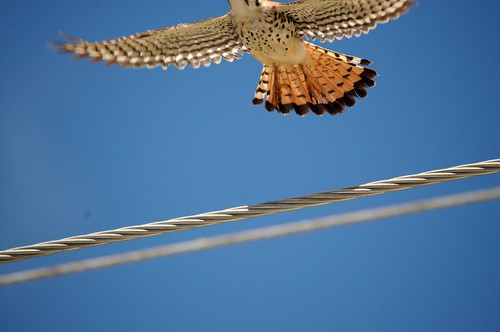
Hmmm. The focus on this shot of an american kestrel launching itself off a telephone wire is pin sharp but I can't help feeling there is something lacking, missing almost from the composition........


Thursday, June 04, 2009
Ospreys = London buses
So long time readers will remember a post I wrote in which I quoted the epic movie Hot Fuzz to vent my rage at blowing a series of awesome osprey photo opportunities. Shortly after that came this osprey related fiasco and then last week I finally dropped some half palatable osprey photos from Venezuela. In the venezuela post I mentioned that a) osprey can be seen just about anywhere, b) we only have 4 of them or so around our islands and c) I was planning to get some awesome photos of osprey somewhere else shortly. Well as it turns out a, b and (in my opinion) c were all correct but, thanks to a and b, c happened rather sooner than expected........
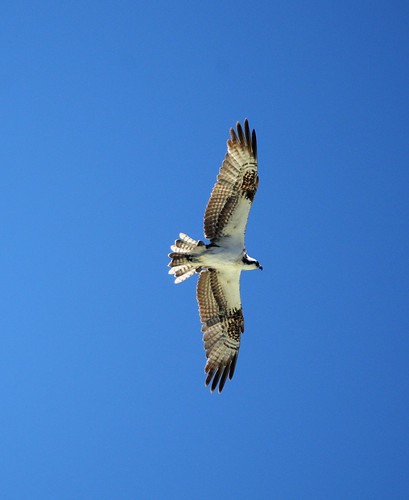
I was photographing a rather interesting little wader when this happened to drift over.
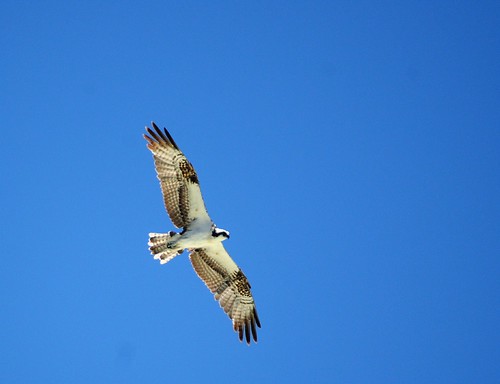
The wader spooked but I relocated it later for some additional shots and, to be honest, who can really focus on drab grey waders when one of these is circling your head? Not me that's for sure.
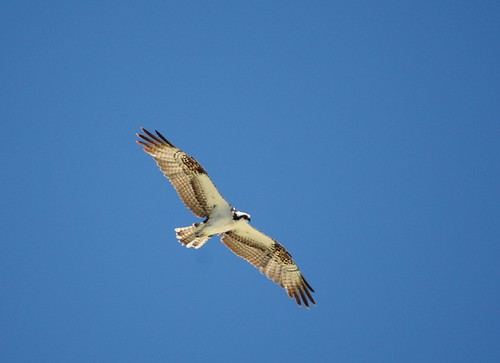
I will however pin the blame for my lack of bonefishing success this weekend entirely on this chap's presence (clearly it had nothing to do with my own deficiencies!).
I was photographing a rather interesting little wader when this happened to drift over.
The wader spooked but I relocated it later for some additional shots and, to be honest, who can really focus on drab grey waders when one of these is circling your head? Not me that's for sure.
I will however pin the blame for my lack of bonefishing success this weekend entirely on this chap's presence (clearly it had nothing to do with my own deficiencies!).
Wednesday, June 03, 2009

Tuesday, June 02, 2009
A visit to the nurse
Time for a break from Venezuela reminiscing for some local stuff. I headed to one of the less populous islands for some r'n'r this weekend. Does a little birding, a little fishing, a little snorkelling, a little herping, some grilled lobster and a glass or two of white wine sound good to you guys too? I thought so. Anyway one thing we haven't seen for a while is a shark. I had three species over the weekend, the biggest specimen of which was this 4 1/2 or 5 foot female nurse shark.
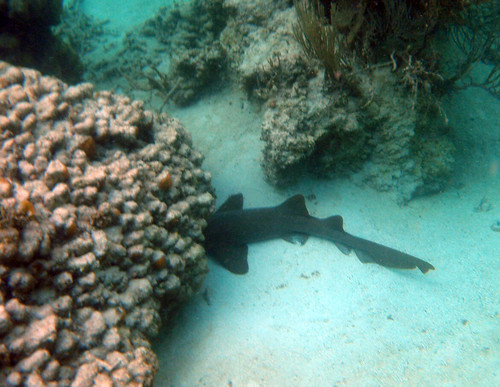
This is a fairly typical first view of a nurse by the way. They love to sit with their heads buried under something like this - it always reminds me of a child playing hide and seek who thinks because they can't see you that you can't see them.
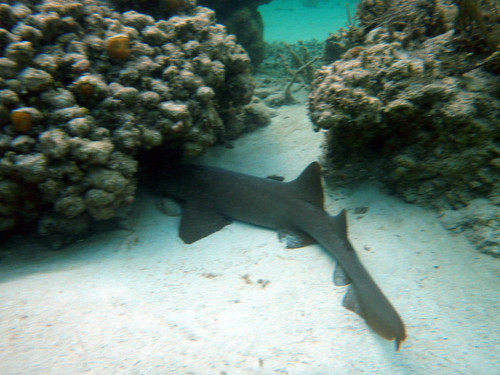
Here's a good view of the angular shape of the nurse shark's body. Notice the huge triangular pectorals, the pair of big dorsals (a pair of close to equally sized dorsals can only mean nurse or lemon shark here) and that long tapered tail. There should be a third photo here but I was using a camera other than my own and at the moment of the perfect passing head shot I pressed the off button instead of the shutter! D'oh!
This is a fairly typical first view of a nurse by the way. They love to sit with their heads buried under something like this - it always reminds me of a child playing hide and seek who thinks because they can't see you that you can't see them.
Here's a good view of the angular shape of the nurse shark's body. Notice the huge triangular pectorals, the pair of big dorsals (a pair of close to equally sized dorsals can only mean nurse or lemon shark here) and that long tapered tail. There should be a third photo here but I was using a camera other than my own and at the moment of the perfect passing head shot I pressed the off button instead of the shutter! D'oh!
Plastic Dholes
In addition to the Orinoco delta and the plains of Los Llanos, we explored a third ecotype whilst in Venezuela - this was the grassland of Le Gran Sabanna.
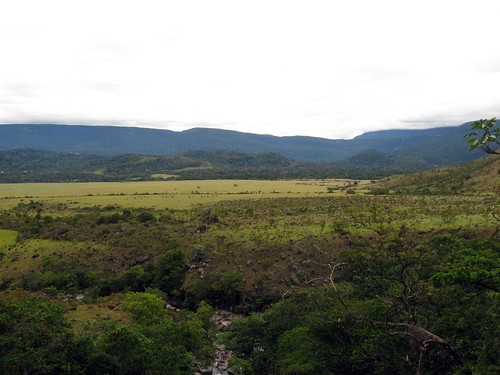

My first thought when we got any kind of elevation to take a look over the landscape was how much it resembled a steppe or an african plain. The thatched hut look of the settlement at Kavak (below) only confirmed the impression. Sadly there were no big herbivores in sight. South Africa (like North America) used to have an array of big grassland herbivores, glyptodonts, ground sloths and so forth, as well as the carnivores that inevitably followed. Some big animals remain (giant anteater, puma, jaguar, whitetailed deer) but the majority were hunted to extinction.
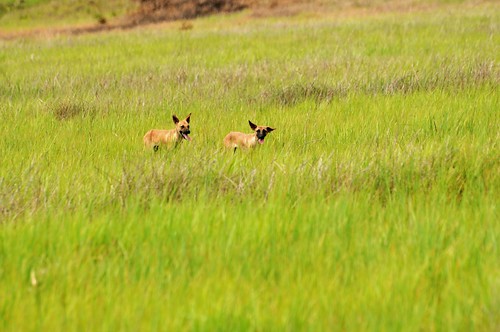
I was a little bit surprised therefore as we wandered across the plains when the pair below loped out to meet us. I couldn't really work out what they were at first. I dared to think of maned wolf at first but what they really reminded me of was the Dhole. Dhole (aka Asiatic Wild Dog, Indian Wild Dog or Red Dog or Cuon alpinus)are now restricted to small parts of asia but used to roam across the northern hemisphere in Europe and North America - I don't know how far south they made it before being extinguished in the Americas.
If anyone noted a resemblance to North America's wild Carolina Dogs then, logic prevailed, these are, of course, domestic dogs and their owners soon appeared in view too. Nonetheless, domestic or not, for a second they rewilded the landscape in style - they still fit right in. Harking back to pleistocene rewilding once again, because I am just finishing William Stolzenberg's wonderful "where the wild things were", true Dhole are available for reintroduction into North America although interbreeding and competition with domestic dogs would need to be avoided as much as possible. Domestic dogs are in a different genus to Dhole by the way which they share with coyotes and wolves although some researchers have argued that in fact Dholes were the species from which dogs were bred. Beyond noting that I have nothing to add as dog evolution is a difficult area which is beyond me.
Monday, June 01, 2009
Dioon rzedowskii
So I recently got the chance to spend some time wandering the St. George's Botanic Garden in St. Croix. Now the good news is that this is a rather delightful little garden with a whole cycad section. The less good news is that it took a hammering during a hurricane and is still recovering and the island of St. Croix in general is infested with a type of cycad pest the combination of which has killed a few plants (I base this statement solely on the presence of their labels left plantless like little tombstones here and there) and left a few others in need of a little TLC. A few of the plants are really doing well though and one of them is this:
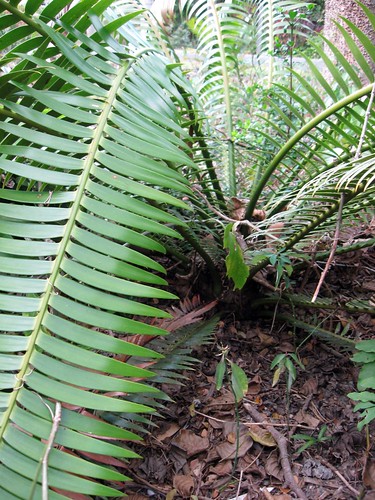
What is it you ask? Well that is an excellent question and for much of the afternoon looked like being one I'd struggle to answer. I was convinces it was a Dioon because, well, it looked Dioon-ish. As to species I was a little stumped. Eventually after a bit of searching I came across a near buried label that gave this beauty a name. Its Dioon rzedowskii.
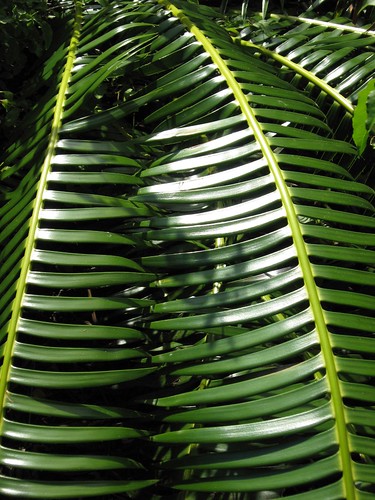
As you can see the leaves are pretty simple but rather impressive. I suspect they are a little more elongated than usual as the plant was in a fair bit of shade. Wondering about the name? It is named for Jerzy Redowski, a Polish-born Mexican botanist who also has a pine tree named after him (lucky chap). As you may be able to see from the photo below this specimen is a little lopsided and is putting up with some volunteer palm and climber seedlings to boot.
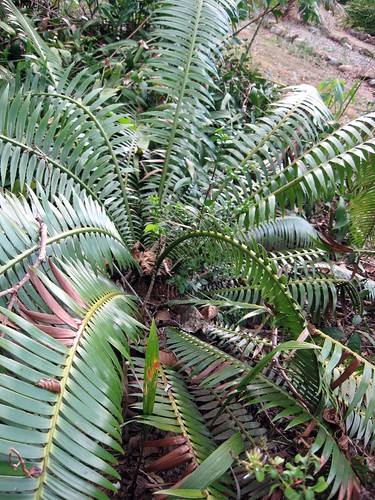
Like most other Dioons (of which we've now covered a surprising number) this is originally a mexican species. Its known to tolerate slightly more acid soil than most others but other than that is fairly typical of this beautiful genus.
Subscribe to:
Posts (Atom)