Friday, January 07, 2011

cowbird tick

So I managed a second island tick on the weekend but this one was, unlike the waxwing, not a lifer. In fact it was a bird I've seen on 4 continents (I think?) and a bird I used to see every day for 3 years but which I was surprised to discover has appeared here only once. The Cattle Egret.

cattleegret2

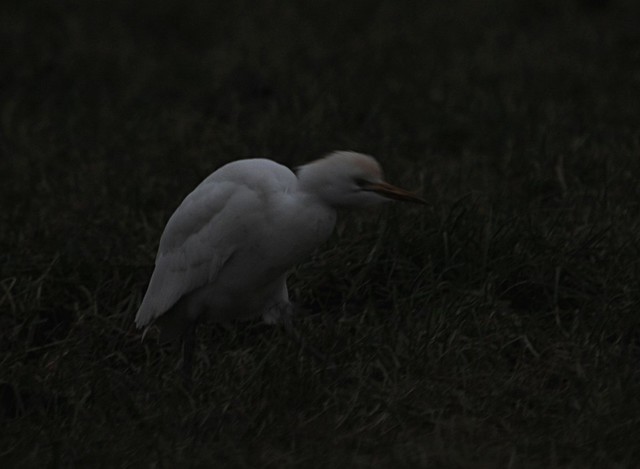
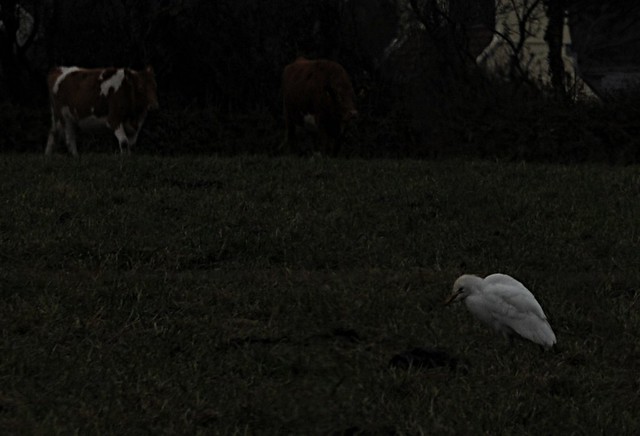
Cattle Egrets are massively widespread as a species and yet they are only now establishing a foothold in the UK (in 20 years they will probably be everywhere just like little egret). On our little island we had quite a few birds the year before last I think but this is our first vagrant of the year. It was doing what cattle egrets do, following cattle, digging in their poo and stuff.

cattle egret1

Disappointingly the obvious composition using our rare breed island cattle and the bird was undermined somewhat by a) the appalling light; and b) the cows abandoning their grazing and running up to see me in the hope I was bringing food.

Thursday, January 06, 2011

Contrasting turtles

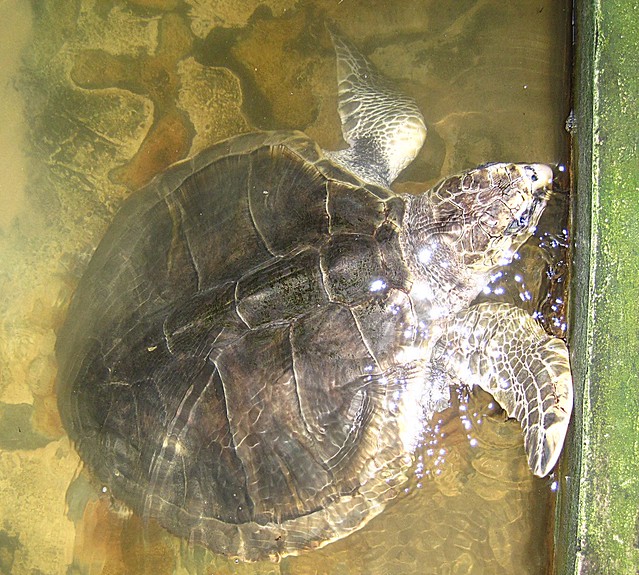
A couple of rather terrible photos today for the purposes of showing you two turtles which I don't think have featured here at E,W&W in their wild state. Both these species are highly recognisable if you know what you're looking for. First up is the small and beautiful Olive Ridley. 

OR
This is one of the smallest sea turtles in the world and is a very delicate, pretty little turtle. These guys have perfectly rounded shells almost like a big O which are broader than what you'd see on a green turtle for example. You'll also note the "O" is bisected by a little raised ridge from nost to tail.

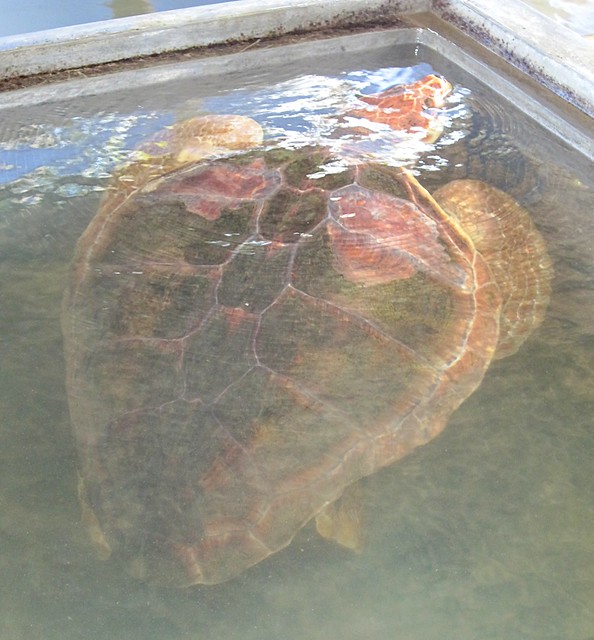
At the opposite end of the scale is the loggerhead....


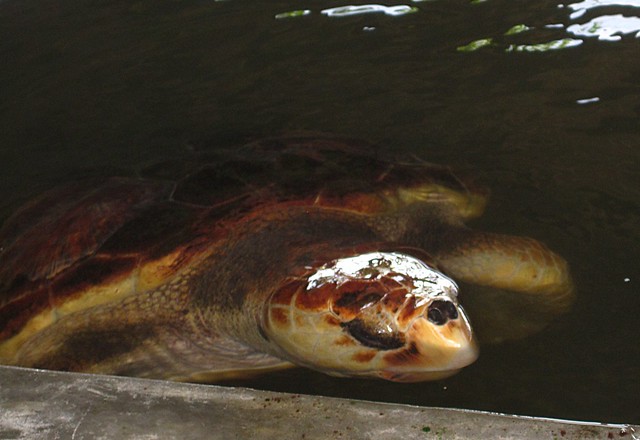
These get very big and are rather less pretty. You can also see on this view that the shell is much less rounded and almost triangular or diamond like in shape. Of course the other dead giveaway on a loggerhead is the, erm, "loggerhead":

loggerhead2

It's huge. If you're wondering about why these guys are in concrete pools they were apparently being held temporarily for rehab purposes at the Haaraduwa turtle farm in Sri Lanka.

Wednesday, January 05, 2011

Waiting for waxwings no more

Waxwings, and for those reading this in the USA I'm talking about Bohemian as opposed to Cedar, always seem to have a special place in the hearts of British birders. It's not like they are a true rarity, if you were desperate to have one on your British list you'd manage it in the year pretty easily, but they are certainly unusual enough that they are appreciated and they're beauty and tendency to stick in a particular area having found food means many will make an effort to go visit any that turn up reasonably locally.

For me though this opportunity has never arisen. Since my interest in birding really took hold I've always been a bit too far south to get local waxwings. Generally those in Scotland or the more northern parts of England are those that get British waxwings as they are pushed out of Scandanavia by the cold. 

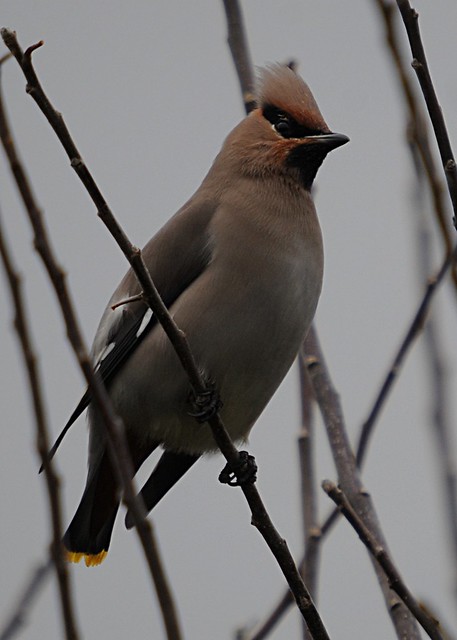
This year though a shedload of waxwings turned up early in the winter in the UK and everyone has been expecting them to get pushed further and further south with cold snaps ongoing and food getting used up earlier than usual in the north as a result of the influx. We waited and waited, as more and more impressive shots and reports arrived from the north and then it happened. On Wednesday the predictions came good for the birders on island and the first reports arrived. So on New Years' Day I headed to a roadside apple tree with high hopes. It's always nice to be greeted by another birder on our small local twitches and as I arrived a fellow with a big grin (waxwings do that) told me one bird was still there but had just flown off and he was sure it would return soon. I glanced across at another tree and saw a starling sized silhouette with a crest. The camera confirmed it was what I thought.
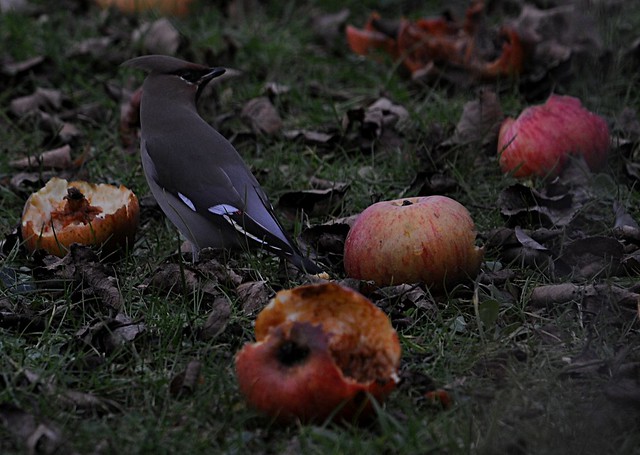
waxwing1

A rather easy lifer once the opportunity finally arose. It soon returned to its favoured tree and began tucking into the abandoned apples carpeting the lawn around it. It always saddens me slightly to see so much of a fruit tree's crop not being eaten by the owner but the circumstances rather prove that this can be a fantastic resource for wildlife. These were shot through a gap in a hedge bottom in appalling light so please forgive the lack of quality. I can't believe this was the best I could do with such a beautiful bird at such short range but its true (and everyone else seems to have had the same issue). Hopefully it will stick long enough for me to get there on a sunny day.

Apples: Delicious for us, delicious for visiting Scandanavian waxwings, fieldfares and redwings.
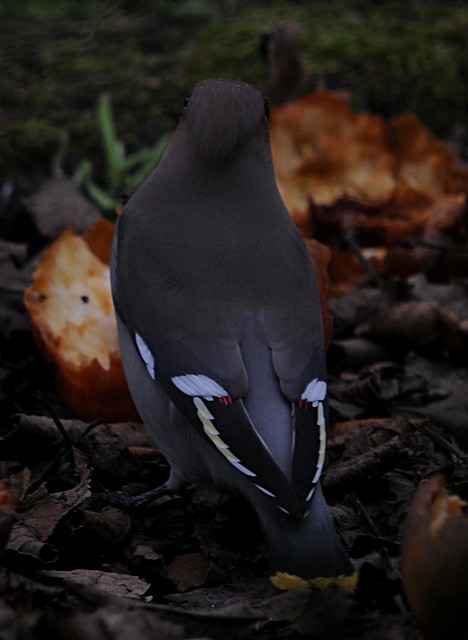
Just with regards to the "waxwing" name, I did get this otherwise disgusting shot which provides a good look at the source of the name; those odd little feather accessories.


I also love the yellow tip to the tail which I didn't really appreciate was so obvious until I saw one in the flesh. It seems ironic that only a week ago I was writing a post about the best bird of 2010 (and the accumulated list of these is now at 10K Birds and rather gripping (in every sense) reading incidentally) but by 10:00am on 1/1/2011 I've already seen a serious contender for the same position for 2011.
Tuesday, January 04, 2011

Moray on the move....

So I mentioned in comments relating to the Honeycomb Moray post that I had video of the beastie and here it is.

There are quite a few interesting things to note in watching this little clip:
  1. As FC pointed out, the colouration of these honeycomb morays is a brilliant example of disruptive patterning and whilst its not so obvious in still shots, the video gives a better idea of how hard it is to follow these things (or at least keep track of the dangerous bits) as they move.
  2. Check out the little cleaner wrasse following it around, cleaner wrasse and shrimps and moray eels go together like apples and cinnamon.
  3. Note the videographer aggressively moving in on my critter and edging me out at the end of the clip. Don't be that guy. Be patient and wait for people to finish they're own shots with a critter and they will be appreciative of this and hook you up with more critters.
 

Minor gripes about dive etiquette aside, Gymnothorax favagineus is easily my favourite moray - it's just gorgeous, it also gets very, very big.