Saturday, February 07, 2009

Floppy furfuracea

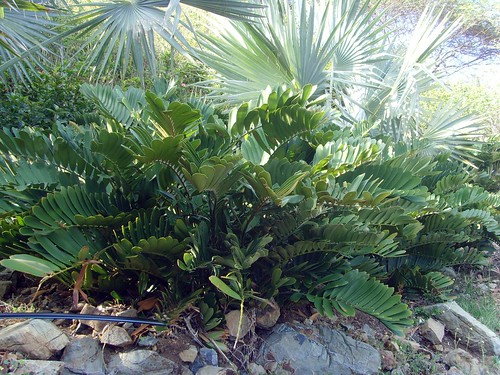
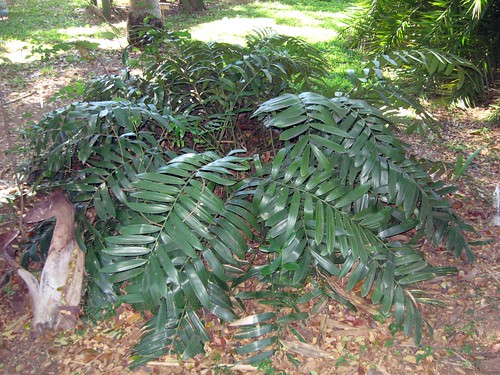
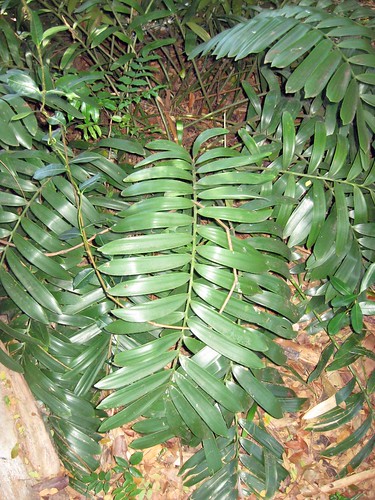
I didn't really no what to make of this Zamia at the local botanic gardens. It looked completely alien to me and I started to ponder a range of frankly silly possibilities. Then I came across a photo online of an "inland form" of Zamia furfuracea, the same species I showed you recently but rather different as you can see. That seems, as far as anyone can tell me, to be what we have here.

cycad6A

Unlike the more commonly seen typical form of Z. furfuracea the leaflets are kind of lax and floppy and the plant pushes these big long leaflets which flop down. It's one of the messier looking cycads I've seen but has a certain care-free charm.

cycad6C

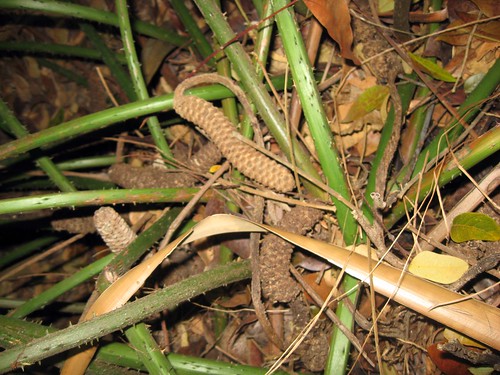
For completeness - the crown held some spent male cones which were also floppy [insert your own cheap gag here]:

cycad6D

Disclaimer: This is one of a number of cycads that are unlabelled in a collection near to me and as such the identification is a best guess based on my own and others' assessment of the plant and the photo's above and so may be best treated with a pinch of salt.

Thursday, February 05, 2009

Cycad seedfest at brunch

Whilst visiting a new brunch venue recently I came across an absolutely huge planting of Zamia furfuracea - the cardboard palm. Now as I'm sure you guessed (if you didn't already know) 'tis no palm but in fact a cycad.

zamia furfuracea

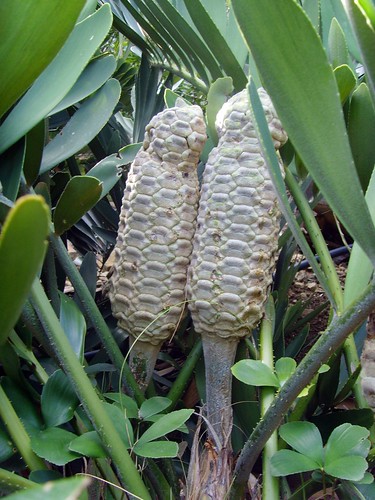
Now having shared the male cones previously, I was delighted to spot a plant pushing 3 female cones. Now I'm always delighted to see coning female cycads because a) that represents a nice healthy mature plant, b) it represents the possibility of seeds and c) the world can never have enough cycad seed in it. Adding to my pleasure was the fact that since I've already covered male Z. furfuracea cones this would be the first "finished" species on the blog ie one with male and female cones and plants represented.

zamia furf fem cone

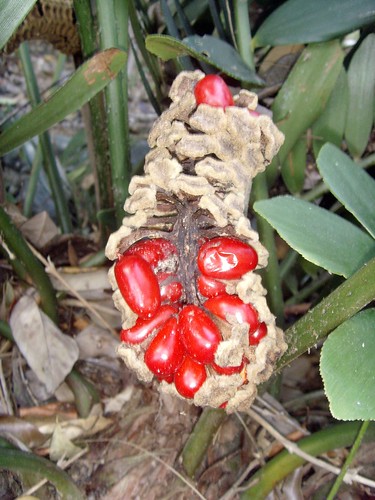
Now while I mentioned the possibility of seeds I wasn't really expecting to see any because even though this was a massed planting and there were almost certainly males coning too cycads generally (and there are exceptions) have very specific pollinators and don't tend to naturally pollinate one another in areas where wild cycads of the same species or at least genus don't exist. Happily I was wrong so I get to show you what a mature female cone with seeds looks like.

zamia seed

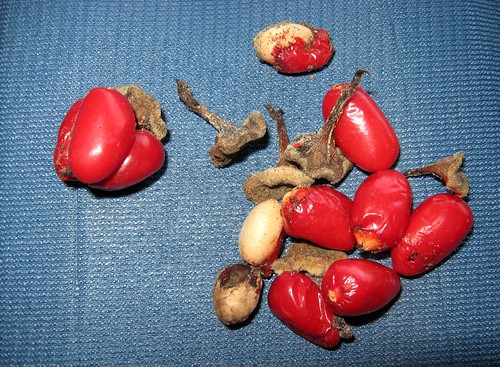
Check out the bright red sarcoestra (the fleshy bit)! Of course Zamia seed are rather poisonous but some animals will take them - I know of a couple of Zamia species supposedly dispersed by crabs. I also happened to notice a couple of seeds that had dropped out of the cone and onto the road. Now I'm not one to scrump seeds (or cuttings - taking nail scissors and baggies to botanic or public gardens is seriously not cool people, at least not unless you've asked permission first (I once had this conversation with the sweetest looking little old lady who I'd seen go after Hidcote garden's famous lavenders like Edward Scissorhands) but these were on the road and were absolutely going to go to waste. So...

furf seeds

.....these few made their way home with me. Hopefully the rest of the cone(s) will be collected and put to use before they too disperse under a car. You can see a mix of the cone scales, clean seeds and seeds still with the sarcoestra in the picture. You have to clean this off (wearing suitable protection) before germinating the seeds btw and it stinks. Hopefully I'll share some seedling photos with you at some point in the next few months. Saturday (or today if you are reading this on saturday) I'll share yet more Zamia furfuracea only slightly different.

Wednesday, February 04, 2009

turtles - the dry way

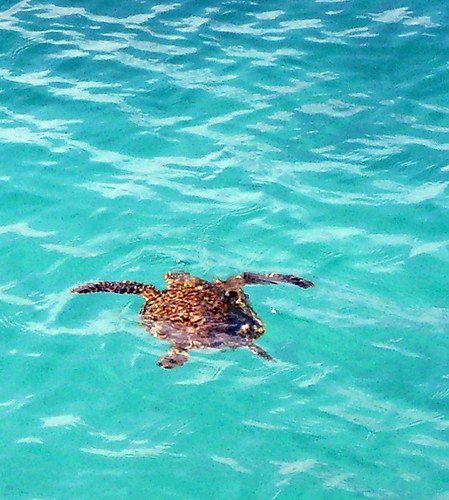
The last couple of months I seem to have seen more turtles at the surface than underwater so it seemed like an ideal time to remind y'all that, when in the tropics or semi-tropics, you don't necessarily need a scuba qualification to see cool ocean life. These photos below were taken from a waterfront bar (beer in hand).

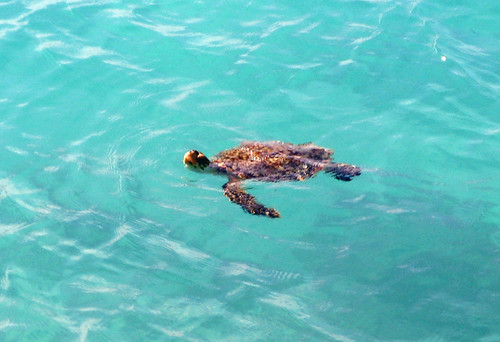
surface turtle
The little chap had obviously found something to his liking as he kept surfacing in the same spot. When you see a turtle surface a couple of times in the same spot there is a good chance it has found something to eat. The result of this is that it will probably continue to surface in the same spot so, with a bit of patience, you'll get to see it pop up again and again and again as it takes a breath between bites.
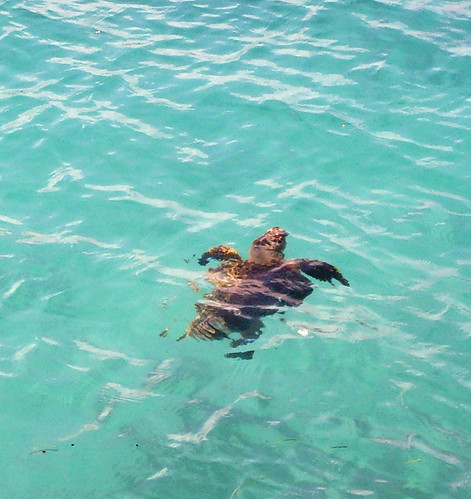
surface turtle3

You are more likely however to spot a turtle on the surface taking a breath whilst travelling from spot to spot. In those cases you'll probably only get a couple of seconds to check it out as, for reasons we've discussed previously the tortugas don't like chilling on the surface. Even so its worth noting that they often seem to follow a pattern. This consists of surfacing grabbing a breath and submerging and then surfacing shortly thereafter to take a couple more breaths at a more leisurely pace. Accordingly its worth keeping your eye on them whenever you see one submerge just in case.
surface turtle2

Of course its easy for me to say this when I have such clear water but not so easy with the sun's glare and wind or waves disturbing the surface. This is why, when on boats or by water, I'm usually spotted wearing polarised sunglasses. These are an absolute must and with them, if you wander or sail the right areas, you should start seeing not just turtles but sharks, rays, marlin, sailfish, bonefish, tarpon, dolphin, whales, dorado, sea snakes and all manner of other what nots without even getting wet (and possibly whilst downing a cold one)!
Monday, February 02, 2009

Ghost

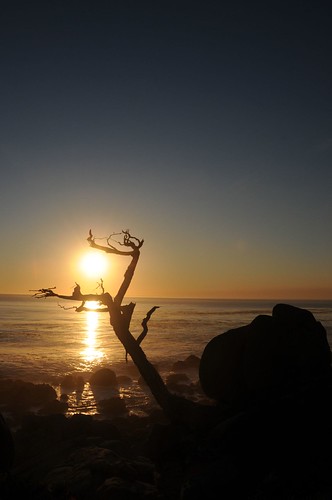
Just along the coast from the lone cypress is another famous old monterey cypress - the ghost tree.

ghost tree

'Tis dead and beautifully bleached white by sun and salt but I shot it in silhouette with as little light as possible to try and get a little atmosphere.

Coming up: condors, bright red seeds, not condors and floaty turtles.