Sunday, February 07, 2010

I miss my sharks :(

OK so they weren't my sharks, they were all our sharks but one thing is for sure - in the caribbean I had ready access to my favourite animals and in the cold atlantic winter not so much (although potentially more so than many of you might think). A lot of visitors to our island surprised me by being surprised there were sharks in our waters (or perhaps they were surprised they saw them). Either way I always enjoyed seeing sharks. Below is a last photo of a lemon shark that is perhaps a 2 or 3 years old swimming back out on to the flats.
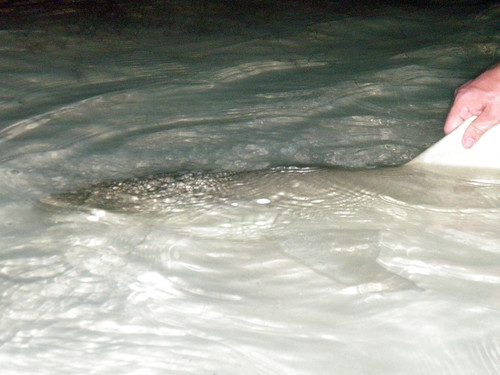
lemon release

She grabbed one of my baits during a lazy evenings fishing from a little jetty directly in front of a popular restarant. Some people would consider a lemon shark this size to be worth keeping as food but a) I don't eat sharks or rays due to their slow reproductive rates and b) lemons are particularly bad to keep for eating as their meat is often flavoured poorly due to ammonia build-up and they have a large number of organs which means they produce very little meat for their size. At the same time something far bigger grabbed my friend's bait so aggressively it yanked his rod from its holder and out to sea (the rod was recovered the next day by snorkel).

Wednesday, February 03, 2010

just some leaves.......

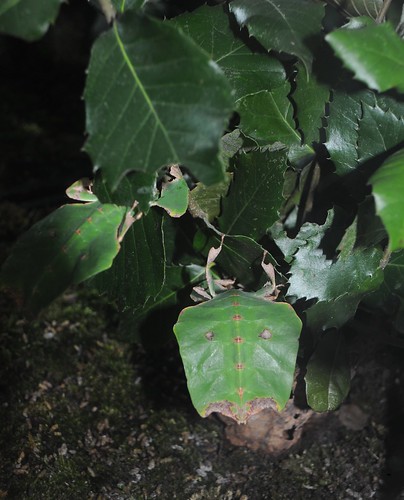
Just kicking back photographing this nice caged jar of Holly Oak leaves......

phyllium giganteum

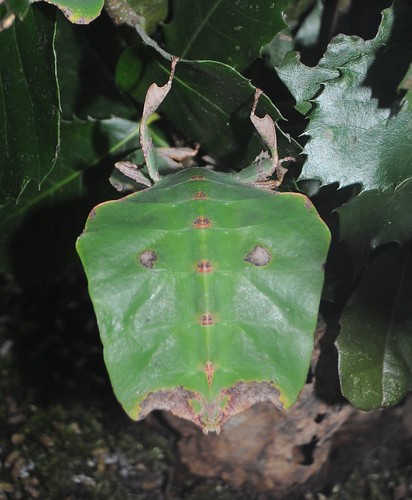
......wait a minute.......that leaf ain't no leaf!!

phyllium giganteum2

These are Phyllium giganteum, the giant leaf insect and possibly the coolest of all insects. I quite fancy trying to get a colony of Phyllium going this year but sadly this species is supposed to be quite difficult to culture. Others are easier though.

Tuesday, February 02, 2010

Cassiopea

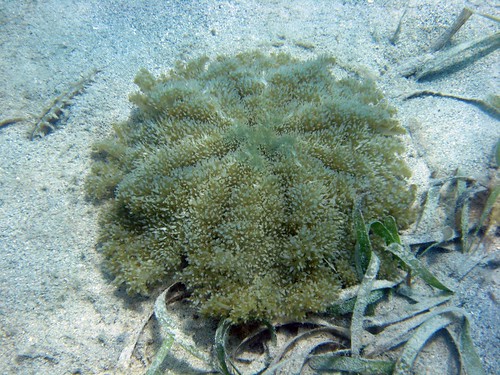
I know what you're probably thinking. You're thinking this is a sand anemone, right?

casseopea

The sort of thing which hosts cute little clownfish in the middle of nowhere. If that is indeed what you were thinking, you are wrong for 'tis no anemone. It is in fact a jelly doing a rather good anemone inpersonation. This is a Cassiopea or upside-down jelly.

These are fairly common in shallow bays and mangrove areas around the tropics and are one of the few jellies that can be maintained in standard aquaria.

Monday, February 01, 2010

Ram jam - Ramirez's Little Eartheating Butterfly Cichlid (with the irregular lateral line)

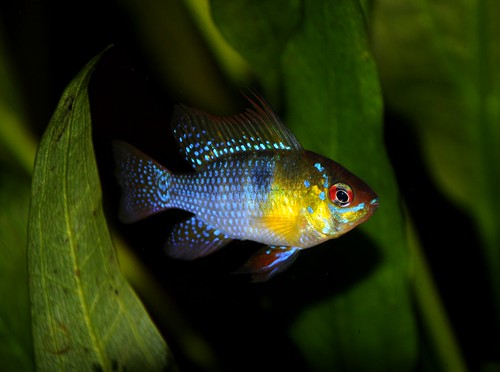
A rare captive shot here, for the simple reason that the only way I can show you how spectacular the dwarf cichlids of south america are is through aquarium specimens and this is perhaps the most spectacular of them all:

ramirezii

Known to most aquarists simply as a "ram" this little guy (the picture you are looking at is almost twice life size). Originally it was scientifically named Apistogramma ramirezi, ramirezi signifying the collector Manuel Ramirez and Apistogramma meaning "irregular lateral line", it has also been known as Papiliochromis ramirezi (Ramirez's butterfly cichlid), Papilochromis ramirezi (Ramirez's butterfly cichlid wrongly spelt) and Microgeophagus ramirezi (Ramirez's little eartheater wrongly spelt again) but is correctly known, for now at least, as Mikrogeophagus ramirezi (Ramirez's little eartheater).

We'll stick with ram shall we? Like most in this group rams are characterful little devils. They mate, form pairs, defend territories, build nests, brood the eggs and defend their young......and all at about 2 inches long while looking like Faberge fish not living animals. Given correct conditions Rams (and other dwarf cichlids) are easy to look after and great fun to watch although the hustle and bustle of many community tanks can be a bit much for them and they much prefer a biotypic planted tank with tetras and small catfish from the region as chums. If you keep tropical fish and you haven't tried a south american dwarf cichlid give one a go. If you don't visit your local pet store and wonder.