Monday, December 07, 2009

King Rat

So having shared some photos of, and raved about, Florida's beautiful corn snakes I must make a confession, the corns were not my favourite of the week's snakes (nor were the pythons), hell - they weren't even my favourite rat snakes of the week. Why? Well because from the moment I saw it, this was always going to be the top critter of the week.
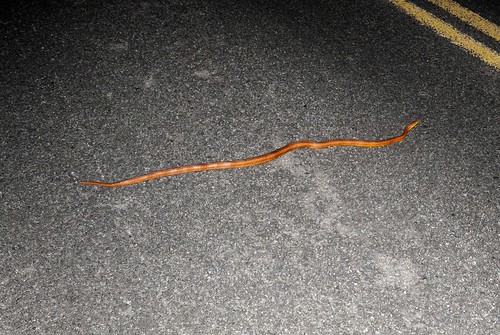
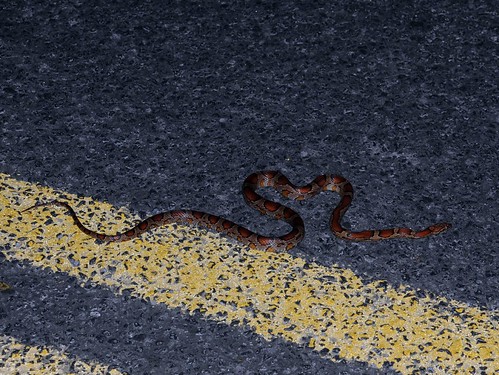
ratsnake4

As you can probably guess from its size in comparison with the yellow lines; this was a pretty big snake. To be a little more specific this is a pretty big Everglades Rat Snake, Elaphe obsoleta rossalleni. I probably don't have to tell you that seeing a fat 5 foot bright orange snake in your headlights as you drive a quiet road is a pretty awesome sight. I think that is part of the reason I enjoyed this one so much - it was so spectacularly obvious as to be almost unbelievable which was how I felt about my first experience of proper roadcruising: I couldn't believe it was so easy and so much fun.
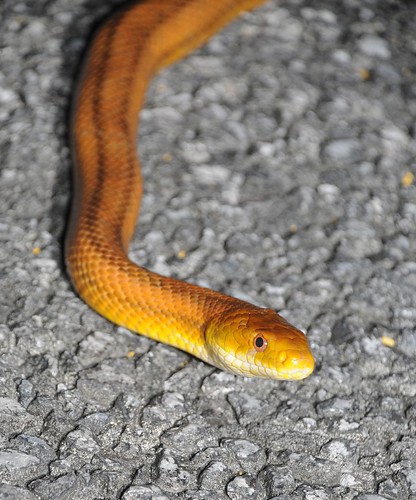
ratsnake

'Glades rats are (depending upon whose taxonomy you listen to) a subsepecies of the black rat snake and so are technically the same species as that monster grey rat snake that FC posts from time to time though it looks completely different. It would live a similar life too cruising the forest eating small rodents and reptiles and making the odd foray for nestlings or eggs. All the while looking absolutely spectacular. I would say that critters like this make me understand why so many amercians move to Florida but apparently for many of them these guys are absolutely not a reason to move home (at least not to move toward them!). People are strange. How could you not love this guy?

Saturday, December 05, 2009

More marsh

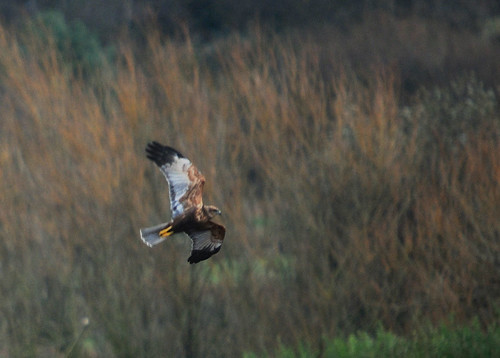
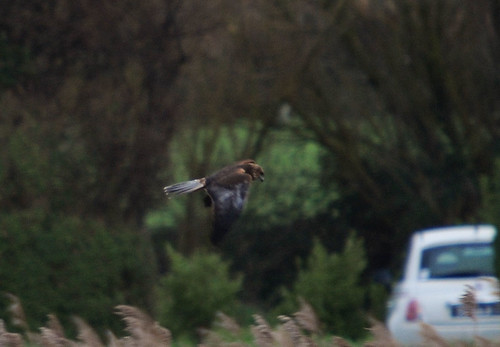
Curiouser and curiouser; the virus(es) on my PC seem to have completely disappeared by themselves. I'm delighted to have my PC working back at normal speed but a little disturbed they did one of their own accord - I think they might be regrouping somewhere on my HD! Anyway it lets me share some marsh harrier shots from last week.

marsh harrier4

Strong winds meant the harrier was able to hover sideways on the gusts giving great views of his underwing patterns before returning to hunting normally.

marsh harrier5

Come summer when the light is good I intend to spend a lot of time somewhere near that mini getting awesome shots of these guys. For now these will have to do.

Friday, December 04, 2009

ugly duckling

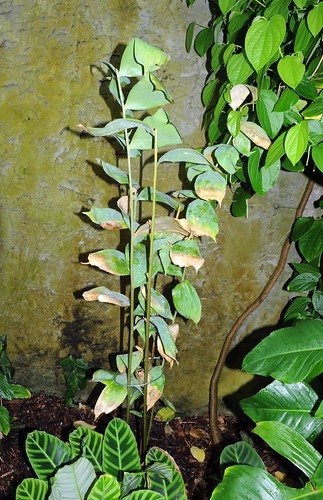
Looking at the plant below, you'd be forgiven for, erm, stopping looking at it rather quickly. Not particularly attractive upright stems, big leaves, some sort of lily post deadheading perhaps? Not at all. This is one of the most sought after of all cycads; Ceratozamia euryphyllidia.

ceratozamia euryphyllidia

When it's not looking as sorry for itself as this one does this one is truly spectacular(and a lot of the other pictures online of the species looking spectacular are of this particular individual which on my day visiting it had obviously had a pruning for some horticultural reason - it'll grow back).

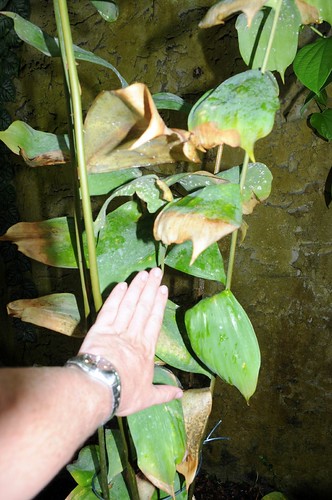
ceratozamia euryphyllidia2
You can sort of see why in the above shot. That is my (as previously discussed average sized for a bloke) hand alongside some gigantic leaflets. Now imagine those arrayed either side of a 10 foot long leaf and you can imagine why this might be a desirable species to have. Unfortunately its yet another highly endangered plant. The wild population located in Veracruz, Mexico, apparently consists (or consisted of) around 30 plants. Whether any still exist I cannot say. There are rumours on the cycad grapevine that a single (shameful) collector now possesses a lot of (perhaps all) the wild specimens having collected from that population. They are not being pollinated and so the species remains critically endangered and rarely seen. In fact the above is the only specimen on public display I know of. Perhaps some day the collected population will get pollinated by someone and seeds will be spread across the world protecting the species. Perhaps not.

Thursday, December 03, 2009

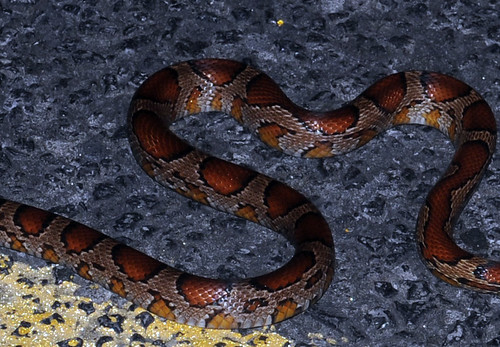
Corn-ucopia of colours

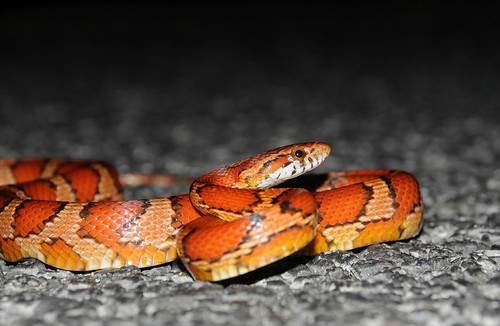
So in the last corn snake post I mentioned Elaphe guttata's spectacular range of colorations and I thought before I forgot it'd be worth doing a comparison post. So here's the one I featured last time again which is just a beautiful specimen:

2nd corn

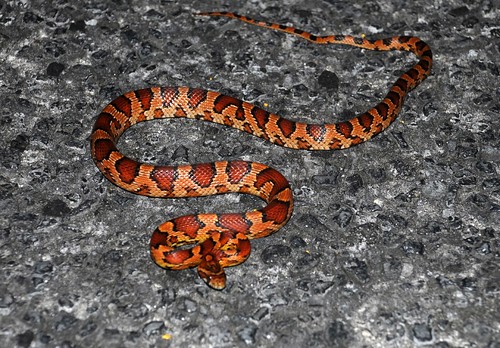
This is the first one I found (which is why the shots are less good, I was still getting my snake shooting eye in as it were). You can see its much deeper in both the reds and yellows and just generally bolder in its pattering.

corn

The black margination around the red rosettes is a lot clearer too. I really liked this one and wish I'd got better photos.

corn2

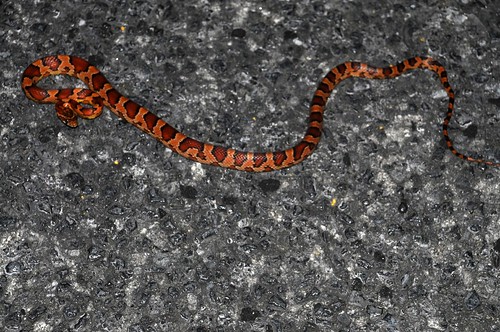
And then this last corn is completely different again. Unfortunately there are no attractive close-ups of this snake either as it was already dead on the road which was a heartbreaker. A really pretty snake and it can only have been hit a few minutes before I came along (when it would have been escorted off the road to safety whilst I took nice photos of it).

corn6

As you can see this snake has no yellow in it but rather a kind of tawny-grey. A completely different look again.

corn6crop

Most regions across the south-eastern USA have their own corn "look" - they vary tremendously even within a small area as this post shows (these were all found within a mile of each other) but tend to have a similar look. Snakes from further north or east than these would look rather different again. Pretty cool eh.

Tuesday, December 01, 2009

Burnished buff tanager

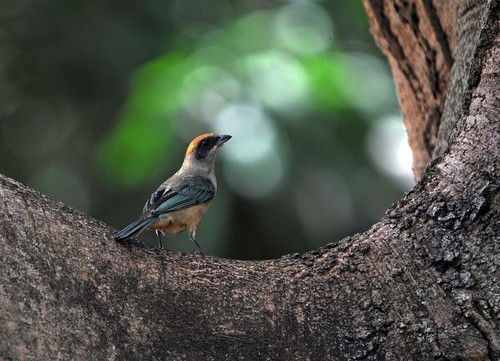
I mentioned a while ago that the neotropical birds' names are brilliant - lengthy descriptions as much as names. This one is a particular goody; burnished buff tanager.

Burnished buff tanager - cayana ssp.

It is a tanager. It buff and the markings do look kind of burnished. It does exactly what it says on the tin.

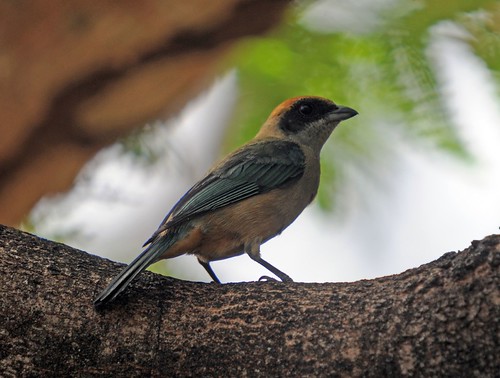
Burnished buff tanager - cayana ssp.

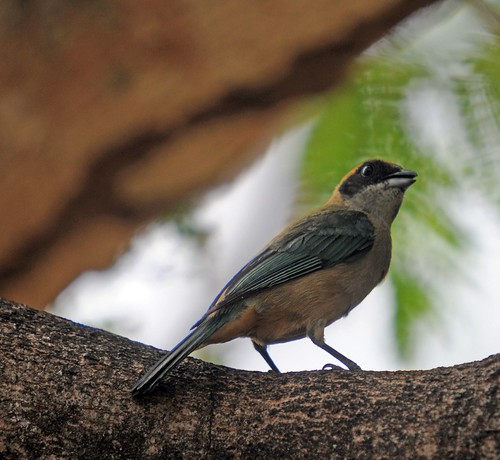
The wings look almost like they've been fashioned from greening copper, lovely. This was the only one I saw, working its way around the garden at Hato el Cedral. Its an absolute beauty of a songbird and seeing a little flock of these would be fabulous.

Burnished buff tanager - cayana ssp.

I think that's one of the cooler aspects of visiting somewhere new. Its not only the rare stuff but the different common stuff hopping around in gardens and parks. There were many other birds in the gardens of Hato el Cedral plus mammals (3 species), amphibians and reptiles. I know I'm making a bit of a meal of these venezuela posts but think of them as occasional winter warmers. We'll get to them all eventually.